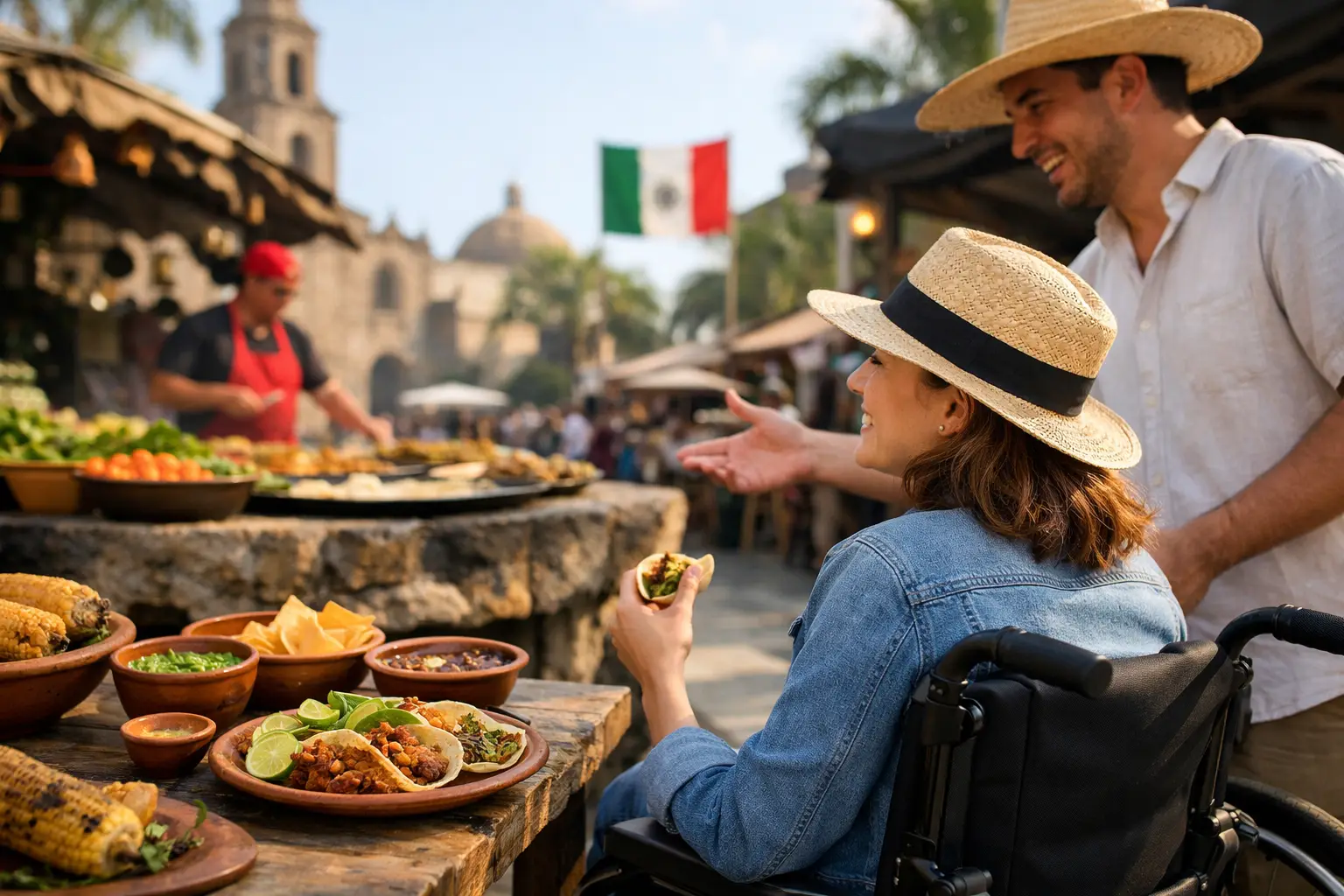
A wheelchair accessible food tour in Mexico should be an enjoyable way to discover the country through its food, not a logistical obstacle course. In San Miguel de Allende, that requires some advance planning because the same cobblestone streets and historic buildings that make the city so beautiful can also present challenges for travelers with mobility needs. The right experience begins with clear communication, realistic expectations, good planning, and, of course, excellent food.
Mexico is made for eating with curiosity. A proper food tour can bring you face to face with the cook behind a memorable salsa, the story inside a slow-simmered mole, and a taco that requires exactly the right technique to eat without wearing it. Accessibility should not mean sitting outside that celebration. It should mean having a well-considered way into it.
What a Wheelchair Accessible Food Tour in Mexico Should Include
“Accessible” can mean different things to different travelers, so a good conversation before booking is essential. In San Miguel de Allende, accessibility also comes with some challenges that are part of the city itself. The historic center is filled with centuries-old buildings, narrow sidewalks, uneven streets, and historic properties where structural changes to entrances are not always possible.
San Miguel de Allende’s historic center is a UNESCO World Heritage Site, and many of its historic buildings are protected. Their age, architectural characteristics, and preservation requirements can make accessibility modifications difficult or impossible.
That does not mean a food experience is out of reach. It means planning matters. When you share your mobility needs with us in advance, we can talk through the route, the participating restaurants, and what can realistically be accommodated. Some restaurants have accessible entrances, while others may have architectural limitations that cannot be changed. Our goal is to know those details before the tour, rather than discovering them when you arrive.
Access Is More Than the Front Door
A restaurant may have an accessible entrance, but the rest of the space may present different challenges. That is why it is important to discuss your needs before the experience. Details such as the type of wheelchair or mobility device you use, whether you can manage a small step, and what kind of access you need can help us plan more carefully.
San Miguel’s historic architecture is part of what makes the city so special, but it also means that some buildings cannot simply be remodeled to meet every modern accessibility standard. We cannot change the streets or the historic structures, but we can communicate with you beforehand and make thoughtful choices about the experience based on what is realistically available.
It is also important to consider the route itself. San Miguel’s historic streets include cobblestones, uneven sidewalks, and areas where moving through the city can require more time and attention. We want guests to understand these conditions before booking so they can decide whether the experience is appropriate for their individual needs.
The Food Should Still Be the Main Event
An accessible food experience should never feel like a consolation prize. San Miguel’s food culture is broad enough to offer a delicious and meaningful experience while taking individual mobility needs into consideration. The important thing is to plan ahead and understand what each venue can offer.
Think handmade tortillas, fragrant salsas, regional cheeses, seasonal produce, slow-cooked meats, traditional sweets, and drinks that deserve more attention than a quick photo.
The most memorable stops add context to every taste. Why is a particular chile toasted before it is ground? What makes a mole layered rather than simply spicy? Why do Mexican families care so much about the tortilla at the center of the table? When a chef or trained gastronomic guide explains the hands, ingredients, and history behind a dish, lunch becomes a conversation with the city.
At Unforgettable Culinary Traditions, we believe accessibility starts with communication. If you let us know about your mobility needs before booking, we can discuss the route and participating restaurants with you and determine what can be accommodated. We want guests to know what to expect before the experience begins, so they can focus on the food, the stories, and the pleasure of discovering San Miguel.
Build in Time, Not Just Tastings
A food tour packed with too many stops can be tiring for anyone. For wheelchair users, uneven streets, doorways, and transitions between venues may require additional time. Allowing a comfortable pace gives everyone more time to settle in, ask questions, enjoy the food, and experience the city without feeling rushed.
Weather deserves some planning as well. Rain can make old stone surfaces slippery, while bright sun can make a short outdoor wait feel longer. If weather or another unexpected situation affects the route, advance communication allows us to discuss the available options rather than leaving everything to the last minute.
The goal is not to rush from one tasting to another. It is to enjoy the food, the people, and the stories along the way.
Questions Worth Asking Before You Reserve
Before booking, have a short conversation with the tour team about your mobility needs. Ask about the amount of walking involved, the types of surfaces along the route, and the accessibility of the participating restaurants.
It is also helpful to explain what you need rather than simply saying that you require an accessible tour. Details about your wheelchair or mobility device, whether you can manage a step, and any other practical considerations allow the team to give you a more useful answer.
In a historic city like San Miguel de Allende, some access limitations are part of the buildings themselves and cannot be modified. The important thing is to discuss those limitations in advance and make an informed decision about whether the experience is right for you.
You may also want to ask:
Are the planned restaurant entrances step-free, or are there thresholds or ramps? What type of access is available at each restaurant? Is there an accessible restroom available during the experience? Is there anything about the route that could present a particular challenge? Can the timing or pacing be adjusted based on individual needs?
The quality of the response matters. A simple “it should be fine” is not as useful as a clear explanation of what you can expect. Good planning allows everyone to arrive with realistic expectations and enjoy the experience with greater confidence.
Traveling With Companions and Different Mobility Needs
A well-planned food experience can work beautifully for couples, families, and groups with different mobility needs. The important thing is to discuss those needs in advance so everyone can understand the route and what each venue can accommodate.
Companions should not have to spend the entire experience worrying about logistics. They should be enjoying the food, learning about Mexican culinary traditions, and taking part in the same experience as everyone else.
When practical details are discussed ahead of time, the focus can remain where it belongs: on the food, the stories, and the pleasure of discovering San Miguel together.
Let the Food Lead the Way
San Miguel de Allende rewards travelers who slow down. Its historic streets, beautiful buildings, and food traditions are part of what makes the city memorable, even when those same historic characteristics create accessibility challenges.
For travelers using wheelchairs, the best approach is to plan ahead, communicate clearly, and choose an experience where their needs can be discussed honestly before booking.
At Unforgettable Culinary Traditions, we want guests to know what to expect before they arrive. When the route and participating restaurants are discussed in advance, we can make thoughtful decisions about what can be accommodated and help create an experience centered on what matters most: good food, meaningful stories, and the pleasure of discovering Mexico.
The best last taste of the day is not simply dessert. It is the feeling that the city welcomed you fully.
Leave a Reply