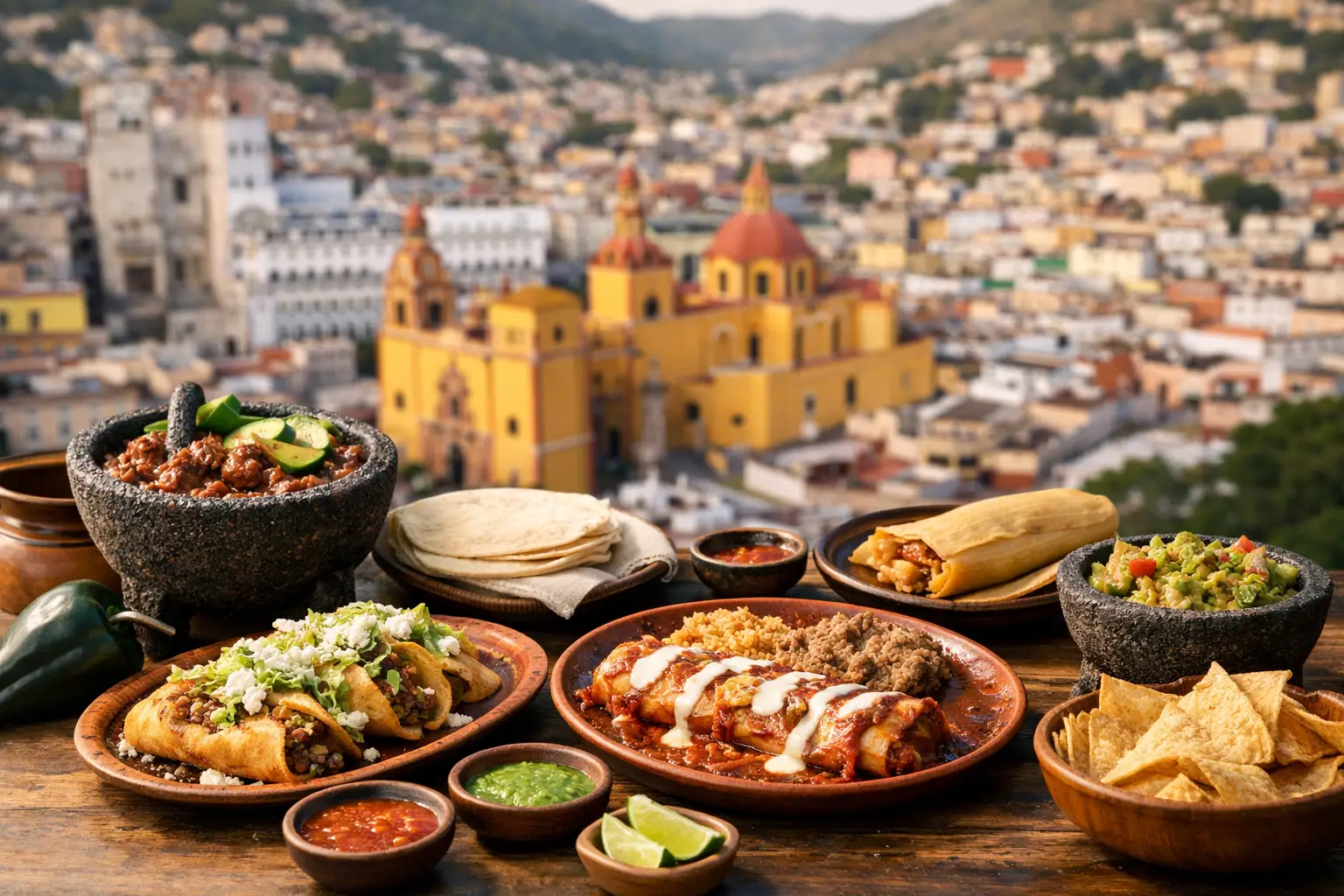
The first bite of a properly made enchilada minera tells you plenty about Guanajuato: a soft corn tortilla, chile sauce with real depth, tender chicken, potatoes, carrots, cheese, and a sharp little burst of pickled jalapeño. It is generous food, built for people who work, gather, celebrate, and insist you have one more bite. This Guanajuato cuisine guide is for travelers who want to eat beyond the postcard – and understand why the dishes on the table matter.
Guanajuato is not a single flavor. Its food reflects mining towns, ranching country, Indigenous corn traditions, convent kitchens, family comedores, and the ingredients that move through central Mexico’s markets. In San Miguel de Allende, that history meets an unusually lively dining scene, where a humble morning taco and a polished chef’s tasting can both be memorable for entirely different reasons.
What Defines Guanajuato Cuisine?
Corn is the center of the plate, especially masa prepared for tortillas, gorditas, tamales, atoles, and antojitos. Beans, chiles, squash, cactus paddles, cheese, pork, chicken, and beef appear again and again, but the magic lies in the treatment: a roasted salsa, a well-seasoned stew, a tortilla cooked moments before serving.
Guanajuato’s mining history also shaped its cooking. Dishes needed to be satisfying, portable, and made from ingredients that were available and affordable. That is part of the story behind enchiladas mineras, or miner’s enchiladas. The region’s agricultural landscape contributes another side of the table: fresh cheeses, seasonal vegetables, fruit preserves, and rich pork dishes that feel especially at home on a cool highland evening.
The best meals here often balance comfort and brightness. A sauce may have dried chile warmth rather than aggressive heat. A plate with beans and meat may be lifted by crumbled cheese, pickled vegetables, lime, or a fiery salsa served in a small bowl. Do not assume a gentle-looking salsa is gentle, by the way. Ask first, then proceed with the cheerful caution of someone who would like to taste tomorrow’s breakfast.
Essential Dishes in This Guanajuato Cuisine Guide
Enchiladas mineras
These are the dish many travelers come looking for, and with good reason. Corn tortillas are dipped in a red chile sauce, lightly fried, and commonly filled with chicken or cheese. They are served with potatoes and carrots, then topped with cheese, onion, lettuce, and pickled jalapeños.
Every kitchen has its own approach. Some versions are saucier and softer; others are lightly fried and more structured. The quality of the tortilla and sauce matters more than a dramatic presentation. Eat them when they arrive, while the textures are doing their best work.
Gorditas and other masa treasures
A gordita is a thick, round masa cake that can be griddled or fried, split open, and filled with anything from beans and cheese to chicharrón prensado, potatoes, or stewed meats. It is one of the finest arguments for slowing down near a market stall.
You will also see quesadillas, sopes, tlacoyos, and tamales throughout the region. Names and forms shift from town to town, so let curiosity lead. If a vendor specializes in only one or two things, that is often a very good sign. Specialists tend to know exactly how long the masa needs on the comal and precisely how much filling makes a bite sing instead of collapse.
Guacamayas
Guanajuato City is particularly associated with guacamayas: crusty bread rolls stuffed with chicharrón, avocado, salsa, and sometimes a splash of lime. It is crunchy, creamy, spicy, messy, and absolutely not designed for a timid napkin strategy.
San Miguel visitors may encounter variations or similar street-food combinations, though the classic version belongs to Guanajuato City’s food identity. If your travels take you there, make room for one. It is not a delicate lunch, but it is a joyous one.
Carnitas, barbacoa, and slow-cooked meats
Weekend mornings in central Mexico are made for slow-cooked meats. Carnitas, traditionally pork cooked until tender in its own fat, are often served by the taco with warm tortillas, cilantro, onion, salsa, and lime. Barbacoa may be lamb, goat, or beef depending on the cook and locality, slowly cooked until deeply flavorful.
These are not interchangeable dishes, and the best choice depends on what is being prepared that day. Follow the crowd, notice where tortillas are being warmed constantly, and look for a steady stream of regulars. A busy stand is useful information, though a line alone is never the whole story.
Mole and pipián
Mole is not one sauce. It is a family of sauces with countless regional and household variations, often combining chiles, seeds, spices, fruit, nuts, tortillas, and other ingredients in measured layers. Some moles are dark and bittersweet; others are red, green, bright, nutty, or gently spicy.
Pipián is especially worth seeking out. Usually built around ground seeds, often pumpkin seeds or sesame, it can be green or red and has a velvety, savory character. A focused mole tasting is one of the smartest ways to understand how much range Mexican sauces hold. You are not simply tasting chile heat. You are tasting technique, patience, memory, and a cook’s point of view.
Sweets with a history
Guanajuato has a serious sweet tooth, and its confectionery traditions make an excellent afternoon stop. Look for cajeta, the caramel-like goat’s milk sweet strongly associated with the state; candied fruits; fruit pastes; caramelized nuts; and regional candies sold in market stalls and traditional sweet shops.
Cajeta may appear in crepes, ice cream, pastries, or simply spooned from a jar. Its goat’s milk tang keeps it from tasting flat, which is why it works beautifully with coffee or a simple vanilla ice cream. Take home sweets if you like, but do not postpone all pleasure until the airport. Taste one fresh, standing in the shop, while deciding whether you really need a second.
How to Eat Well in San Miguel de Allende
San Miguel rewards travelers who mix planned meals with a little room for surprise. The city has excellent restaurants, but it also has market breakfasts, street stands, bakeries, neighborhood kitchens, and family-run places where the menu may be shorter than expected. Short can be wonderful.
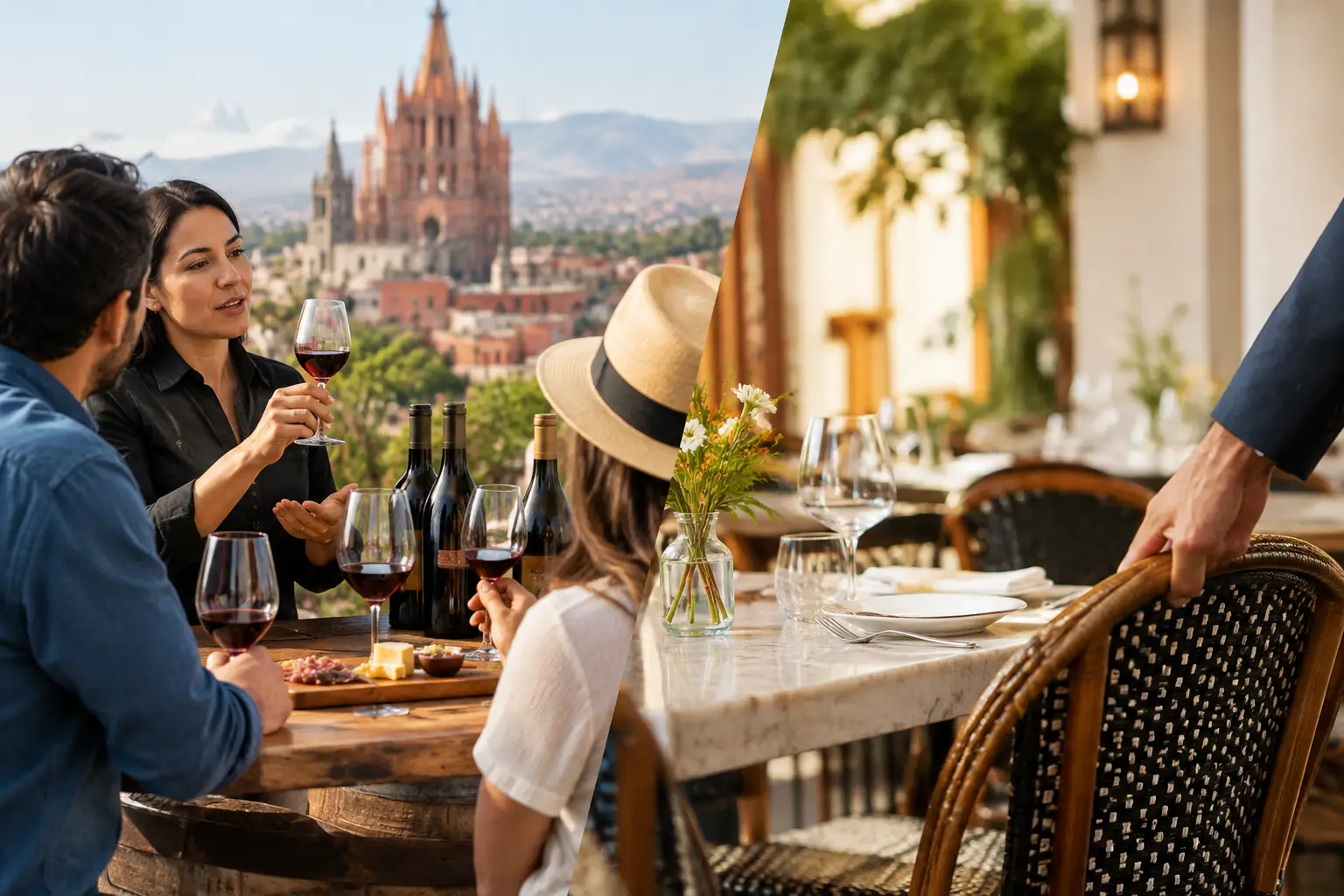
Start with breakfast or lunch at a market, when dishes are fresh and local rhythms are visible. Then save at least one evening for a more leisurely meal where you can ask about the menu, regional ingredients, and the kitchen’s specialties. The trade-off is simple: a polished restaurant may offer comfort, pacing, and refined presentation, while an informal stand may offer a singular taco or stew you would never find on a white tablecloth. A great food itinerary needs both.
Order the house specialty rather than chasing a familiar dish. If a place is known for pozole, order pozole. If a cook is making one stew in a large pot, that stew has your name on it. This is also where a knowledgeable local guide earns their keep: you can spend less time decoding menus and more time hearing why a particular sauce is served with a particular meat, or why a taco is eaten with two tortillas.
At Unforgettable Culinary Traditions, we love that moment when guests realize they are not just tasting Mexico – they understand it. A chef-led experience can bring together the market, the restaurant table, the salsa lesson, and the stories that make a meal stay with you long after the last tortilla disappears.
A Few Practical Rules for Tacos, Tequila, and Salsa
Tacos are usually eaten by hand, promptly, and without being cut into elegant little pieces. Use the second tortilla if one is provided. It is there to support the filling, not to judge you.
With salsa, begin with a small amount. Green does not automatically mean mild, red does not automatically mean hot, and a creamy-looking chile sauce may be the sleeper hit of the table. Ask which salsa is hottest and which one pairs best with your order. Most vendors are happy to tell you.
If you order tequila, sip it before reaching for lime and salt. Good tequila has aromas and flavor worth noticing, especially when it is made from 100 percent blue agave. Still, the right drink depends on the moment. A cold beer with tacos, a local wine with dinner, agua fresca at lunch, or coffee with cajeta can each be exactly right.
Let the Meal Lead You
The most satisfying way to eat through Guanajuato is not to collect dishes like souvenirs. Return to the salsa you keep thinking about. Ask the vendor what they recommend. Make room for the plate that is unfamiliar, the sweet offered with coffee, the taco that requires two hands and zero dignity. That is where a good trip becomes a delicious story you will be very happy to tell.


Leave a Reply