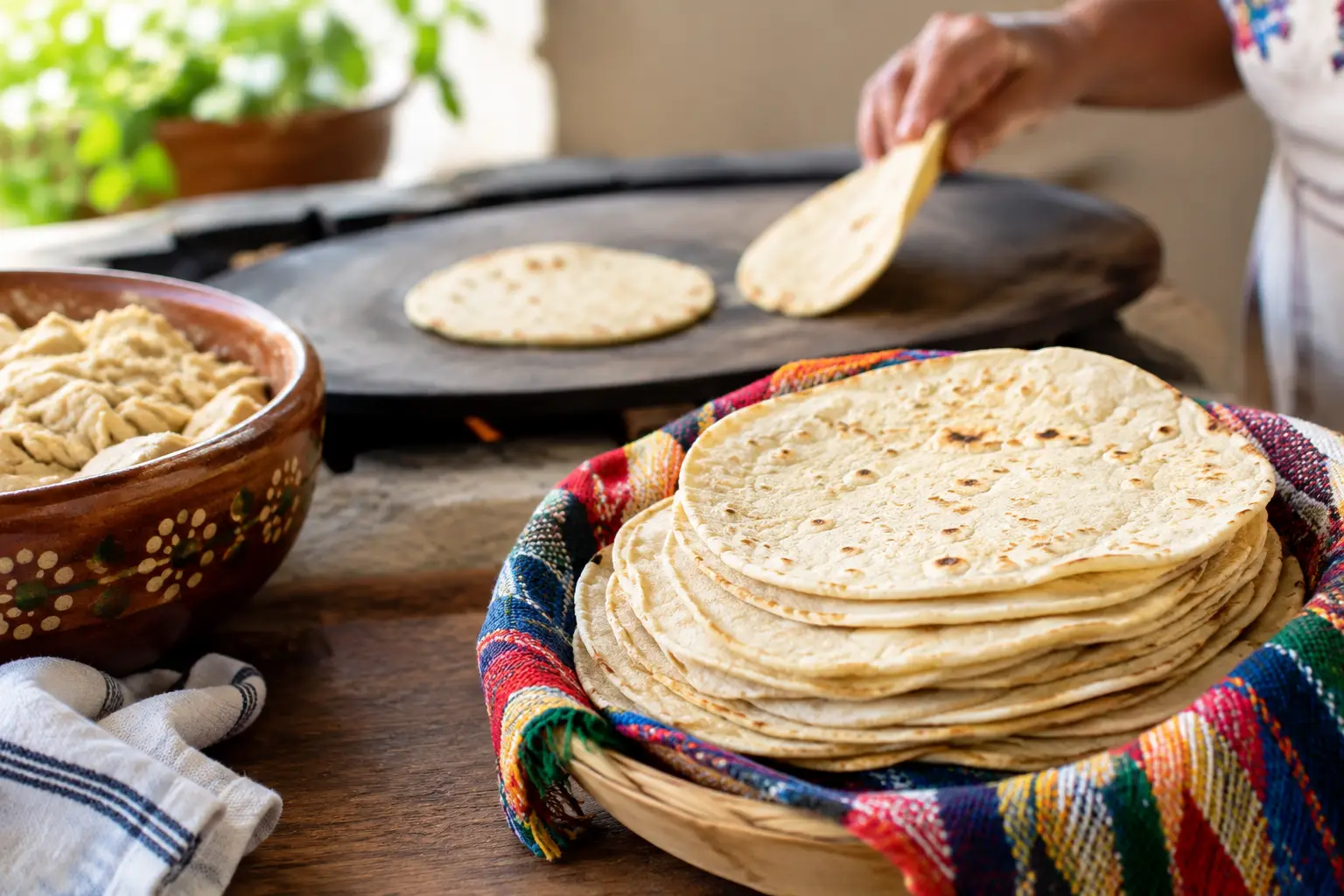
At a Mexican table, the tortilla is never just something placed beneath the food. It is warm, fragrant, and part of the meal itself. It can gather beans, grilled meat, salsa, or the last bit of sauce from a plate. Tortilla making traditions tell a much bigger story than a recipe. They speak of corn, family knowledge, patient hands, and the daily work that has fed Mexico for thousands of years.
For visitors to San Miguel de Allende, a fresh tortilla can be one of the clearest signs that you are eating well. You may hear the soft clap of dough being shaped before you see it. You may catch the scent of corn warming on a comal. And once you taste one straight from the heat, it becomes very difficult to look at a packaged tortilla the same way again.
Where tortilla making traditions begin: nixtamal
The heart of a traditional corn tortilla is nixtamalization, an ancient process that changes dried corn into masa. The corn is cooked and soaked in water with food-grade cal, or calcium hydroxide. After resting, the corn is rinsed and ground into a soft, workable dough.
This is not just an old-fashioned step kept for tradition. Nixtamalization changes the texture, aroma, and flavor of the corn and also improves the availability of important nutrients. It helps make niacin more available and adds calcium to the final food. It is one of the reasons corn has been such an important part of Mexican cooking for so long.
Many Mexican families have traditionally prepared nixtamal at home, often early in the morning. Today, some still do. Others buy freshly ground masa from a local molino, or mill, which is a practical way to keep good tortillas on the table when life is busy. Both approaches are part of the living tradition. Mexican food has always adapted to real schedules, real budgets, and real family kitchens.
There is also a difference worth noticing. Masa harina, the dried corn flour used for many convenient home recipes, can make a very good tortilla when prepared carefully. Fresh nixtamal masa, however, has a fuller corn fragrance and a softer, more elastic feel. Once you know the flavor of fresh masa, you understand why cooks care about it.
The comal is more than a cooking surface
A comal is a flat griddle, traditionally made of clay and now often made of metal, used for tortillas, chiles, tomatoes, onions, and much more. In a Mexican kitchen, it is one of the most useful tools around. For tortillas, its steady heat is essential.
The dough is pressed or patted into a round, then placed on the hot comal. At first, the tortilla looks pale and almost plain. Then small changes begin: its surface dries, faint freckles appear, and the corn scent grows sweeter. Turn it at the right moment and it may puff into a little balloon of steam.
That puff is one of the little signs tortilla makers look for. It happens when the heat and moisture inside the tortilla create steam between its layers. It takes practice to get the thickness, moisture, and heat just right. A tortilla that does not puff is still perfectly good to eat, by the way. Mexican grandmothers are allowed to have high standards; hungry people are allowed to enjoy the imperfect ones.
Fresh tortillas are usually kept in a cloth-lined basket so they stay warm and supple. This is why a tortilla at a good local restaurant can feel so different from one that has been sitting uncovered. Warmth helps preserve its flexibility, and flexibility matters. A tortilla should fold around its food without cracking.
Hands, presses, and the rhythm of the kitchen
In many Mexican homes, tortillas are shaped by hand. The cook rolls a small ball of masa, flattens it between the palms, and gives it a few confident turns until it becomes round. The movement is quick, but not careless. It takes repetition to make tortillas that are even enough to cook properly.
A tortilla press is common too, especially when cooking for a family or preparing a larger meal. The press makes consistent rounds and saves time, but it does not remove skill from the process. Someone still needs to judge the masa, manage the comal, and know when each tortilla is ready.
This is one reason tortilla making is often passed from one generation to another through observation rather than formal instruction. Children may begin by watching, then by rolling little balls of dough, and eventually by trying a few misshapen rounds. The lesson is in the feel of the masa, the sound of the comal, and the look of a tortilla that is ready to turn.
Corn tortillas are not all the same
It is easy to speak of “the corn tortilla” as if there were only one. Mexico has many varieties of corn, and their colors can range from creamy white and yellow to blue, red, and other shades. Each can bring a slightly different flavor, aroma, and texture.
In central Mexico, including Guanajuato, white and blue corn tortillas are familiar sights. A blue corn tortilla is not a novelty created for visitors. It comes from varieties of maize that have long been grown and used in Mexican kitchens. Its color is beautiful, of course, but its appeal is also in its flavor and texture.
Then there are tortillas of different sizes and thicknesses. A small tortilla may be perfect for a taco. A thicker round can support a heartier filling. Large tortillas may be used for dishes that need more structure. The right tortilla is not a matter of one being better than another. It is about the food it is meant to carry.
Flour tortillas have their own place at the table
Corn is central to Mexican food history, but flour tortillas are an important tradition too, particularly in northern Mexico. Made with wheat flour, fat, water, and salt, they are soft, flexible, and often larger than corn tortillas. Their flavor is gentle and their texture can be wonderfully soft when freshly cooked.
In places such as Sonora and Chihuahua, flour tortillas are a point of local pride, and people have strong opinions about thickness, size, and whether they should have a few browned spots. As with corn tortillas, the best version is often the one made close to home, by someone who has made them countless times.
For travelers, this is a useful reminder that Mexican cuisine is regional. One city’s everyday tortilla may be quite different from another’s. Asking where the tortillas come from or whether they are made in-house is an easy way to start a good conversation at a restaurant.
How to taste a tortilla with more attention
You do not need to be an expert to recognize a good tortilla. Start with the smell. Fresh corn tortillas should have a clear, toasted corn aroma, not just the neutral scent of warmed starch. Notice the texture too: it should feel tender and pliable, with enough strength for the food inside it.
Try a small piece on its own before adding salsa. That first bite tells you about the masa, the comal, and the cook’s hand. Then try it with the dish. A tortilla is not meant to compete with the food inside it, but it should contribute something of its own.
When we share Mexican food with guests at Unforgettable Culinary Traditions, this is the kind of detail we love to point out. A taco is not simply a filling folded into bread. The tortilla has its own history, its own maker, and its own job at the table.
A daily tradition worth protecting
Convenience has changed how many people buy and prepare tortillas, in Mexico and everywhere else. There is nothing wrong with choosing what works for a busy day. Still, fresh masa, local mills, small tortillerías, and family techniques are worth keeping alive because they connect everyday food with the people, places, and knowledge behind it.
When you visit San Miguel de Allende, pay attention to the tortillas served with your meal. Ask for another warm one if you want it. Visit a market and notice the rhythm around the masa counter. Let that simple round of corn remind you that the best food traditions are often not hidden in a museum. They are alive at breakfast, lunch, and dinner, passed hand to hand while the comal stays warm.

Leave a Reply