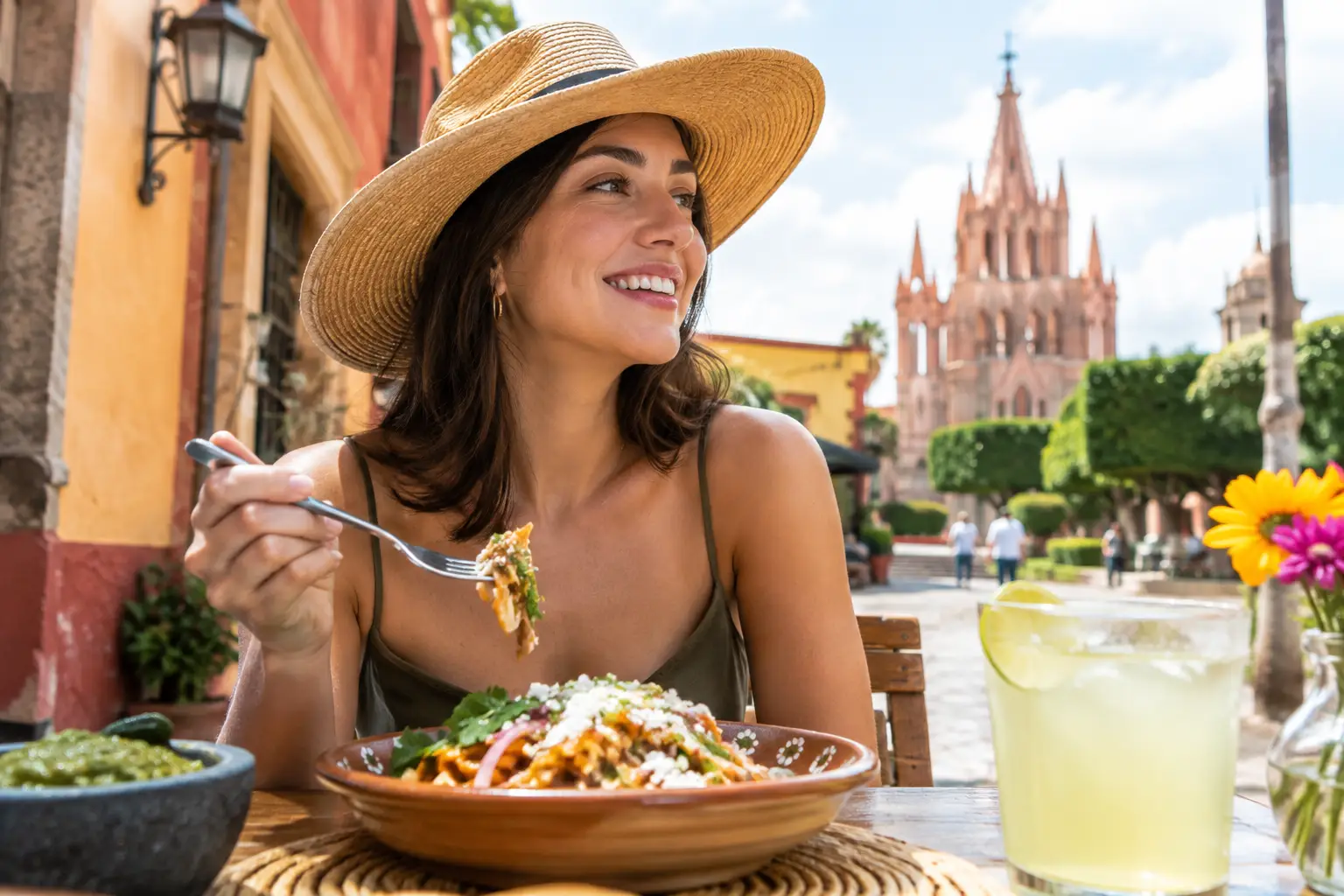
A great meal in San Miguel de Allende rarely begins with a white tablecloth. It may start with the smell of warm corn tortillas near the market, a cook stirring a sauce in a small kitchen, or a waiter recommending the dish his grandmother made on Sundays. San Miguel dining can be polished and celebratory, but much of its pleasure comes from knowing when to sit down, what to ask for, and which local foods tell a story about Guanajuato.
This is a city where a rooftop dinner, a casual lunch, and a long family meal can all belong in the same visit. The trick is not trying to eat everywhere that looks appealing. It is giving each meal enough time to be enjoyed.
San Miguel dining follows a local rhythm
Travelers often arrive ready for an early dinner, then wonder why some restaurants feel quiet at 5:30 p.m. In San Miguel, lunch is often the main meal of the day. Families, workers, and friends gather in the afternoon for a leisurely comida, usually sometime between 2 and 4 p.m. Dinner can begin later, especially on weekends.
That rhythm matters because different foods are part of different moments of the day. In the morning, look for eggs with salsa, chilaquiles, fruit, sweet bread, and Mexican coffee. At midday, you might find a comida corrida with soup, a main dish, agua fresca, and dessert. At night, the city becomes more social, with shared plates, drinks, longer dinners, and conversations that can stretch well into the evening.
There is no single right way to eat here. A couple planning a special anniversary dinner may want reservations and a beautiful setting. A first-time visitor may be happiest with a relaxed local meal. The best plan usually leaves room for both.
Start with the ingredients of the Bajío
San Miguel sits in the Bajío region, an area whose food traditions are shaped by corn, beans, chiles, herbs, cheese, pork, and produce from nearby farms and markets. Mexican food is not one flavor or one menu. It changes from state to state, town to town, and sometimes from one family kitchen to the next.
Corn is a good place to begin. A tortilla may look simple, but its flavor, texture, and aroma can tell you a great deal about the meal ahead. Freshly made tortillas have a soft, warm character that makes even a simple filling feel special. If you are not sure about the heat of a salsa, ask before adding it. Then taste and decide for yourself. That is sensible advice, not a test of bravery.
You may also see dishes that reflect central Mexican cooking: enchiladas, tamales, soups made with seasonal vegetables, grilled meats, and slow-cooked fillings. In Guanajuato, enchiladas mineras are especially worth knowing. These miner-style enchiladas are made with tortillas dipped in a red chile sauce and served with fillings and garnishes that can vary from one cook to another. They are hearty, colorful, and closely connected to the food traditions of the region.
Markets teach you what restaurant menus cannot
A restaurant can serve a wonderful meal, but a market shows you where that meal begins. The piles of chiles are not simply hot peppers. Each one has its own personality: fruity, smoky, earthy, bright, or savory. Dried beans come in different sizes and colors. Herbs arrive bundled and fragrant. Cheese, bread, fruit, nopales, and prepared foods all give you a better idea of what people cook and eat every day.
Markets are also a good reminder that local food is practical. It feeds families, uses what is in season, and makes good use of available ingredients. A cook may turn leftover tortillas into chilaquiles, stretch a pot of beans into a meal for several people, or make a fresh salsa from just a few ingredients.
For visitors, the point is not to treat the market as a photo stop. Buy something small. Try a seasonal fruit, a fresh juice, or a simple prepared snack. Watch how people order. Notice the pace. A little curiosity goes a long way, and politeness goes even farther.
A few useful phrases at the table
You do not need fluent Spanish to eat well in San Miguel, but a few phrases can make ordering easier and friendlier. “¿Qué recomienda?” means “What do you recommend?” “No muy picante, por favor” means “Not too spicy, please.” And “¿Qué lleva?” is a helpful way to ask what a dish contains.
If you have an allergy or a serious dietary restriction, explain it clearly and early. Mexican kitchens can often make adjustments, but not every dish can be safely changed. Sauces, broths, doughs, and shared cooking surfaces may contain ingredients that are not obvious from a menu description. Honest communication is better than guessing.
Let tacos be part of the meal, not the whole story
Tacos are an important part of eating in San Miguel, but they are only one piece of the larger Mexican food tradition. A good taco brings together the tortilla, filling, salsa, and garnish, but there is a whole world of Mexican cooking beyond the taco.
If you want to try several kinds, order a couple to start and see what you like. Some are rich and meaty; others highlight grilled vegetables, beans, cheese, or a fresh salsa. The smaller format makes it easy to taste different preparations without turning the meal into a competition.
And remember that salsa is part of the experience, too. Green does not always mean mild, and red does not always mean fiery. If a server tells you that a salsa is hot, believe them with a smile.
For travelers who want to make tacos, Mexican drinks, and a little friendly competition part of their evening, the Taco, Tequila & Lotería Tour brings those elements together in a relaxed walking experience through the historic center.
Make room for drinks and sweets
A meal in San Miguel is not complete without considering what is in the glass. Agua frescas made with fruit, hibiscus, rice, or tamarind can be refreshing with lunch. Mexican beer is an easy partner for many casual meals. If tequila is on the table, take your time with it. The agave, production method, and style all affect what you taste.
For something sweet, look beyond a familiar flan. Depending on the season and the kitchen, you may find rice pudding, caramelized milk candies, fruit desserts, pastries, or ice cream made with Mexican ingredients and flavors. A good dessert is a lovely reason not to rush away from the table.
If you are curious about Mexican spirits and want to understand more than simply what is in the glass, a guided tasting can help you recognize the differences between styles and learn how tequila fits into Mexican food and culture.
Choose places with care, not fear
San Miguel has restaurants for every kind of traveler, from elegant dining rooms to humble neighborhood favorites. Tourist areas can absolutely offer good food, so do not assume that a busy central location is automatically a trap. The better question is whether a place has care behind it: a focused menu, food served at the right temperature, staff who can explain the dishes, and guests who seem genuinely happy to be there.
Reservations are wise for popular dinner spots, weekends, holidays, and larger groups. For casual daytime meals, flexibility can lead to lovely surprises. Walk a few blocks beyond the busiest streets. Notice where people are eating. Be patient if a small kitchen is busy. Fresh food is not always fast food.
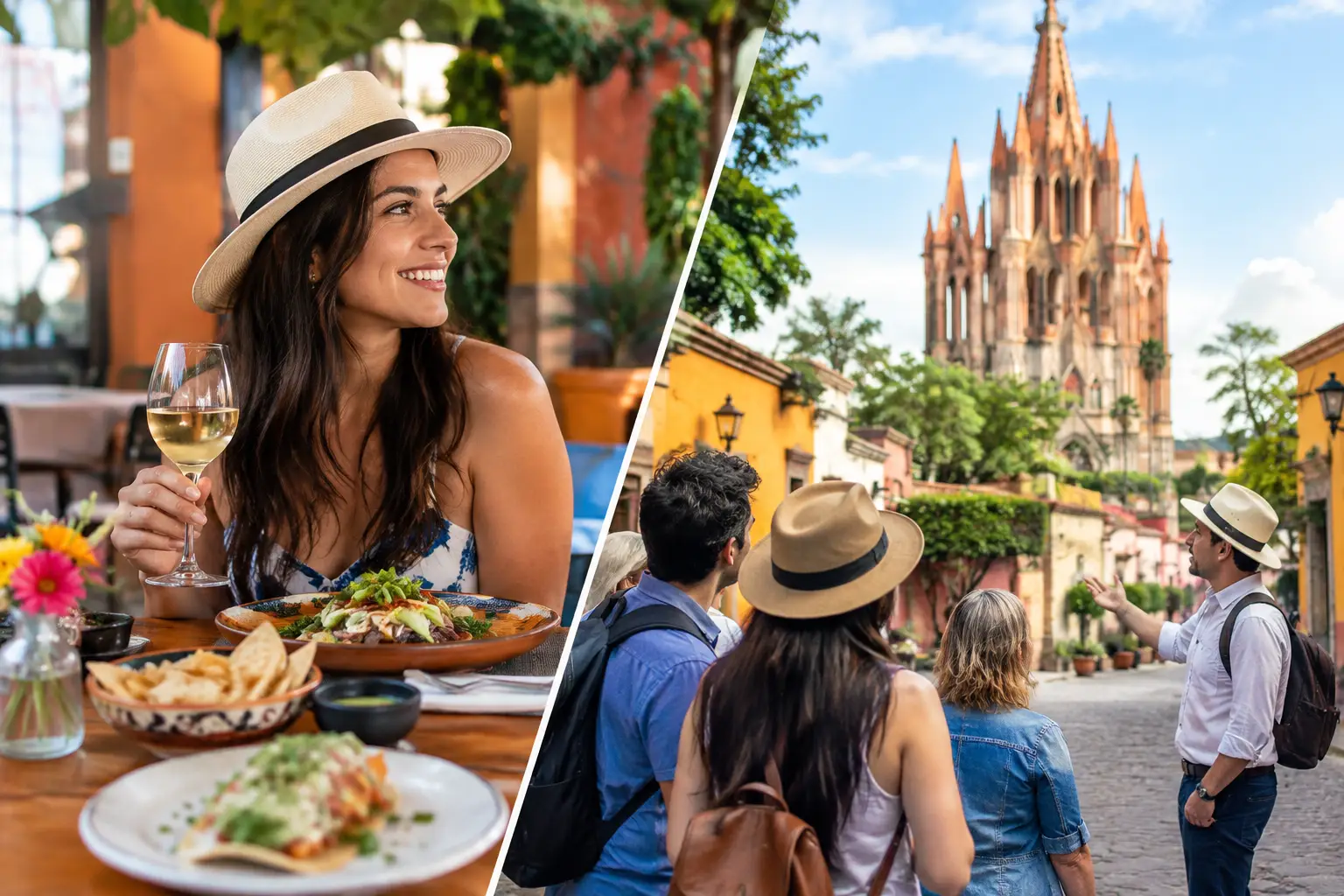
If you would rather not spend your vacation sorting through restaurants and deciding where to start, a chef-led food experience can give you a useful introduction to the city. At Unforgettable Culinary Traditions, the goal is not simply to send guests home full. It is to explain the people, ingredients, and traditions behind each stop, so later meals in San Miguel feel more familiar and more personal.
Flavors with Love for Mexico is a daytime experience built around local food, stories, and several stops in the historic center. For families looking for something relaxed and interactive, Family Lunch & Lotería combines a Mexican meal with the traditional game of Lotería. And for guests who want a longer evening meal, Five-Course Dinner / Delicacies and Colors of a Mexican Night gives the evening more time to unfold around Mexican food and stories.
Bring your appetite, and a little patience
The most memorable San Miguel meals often come with conversation. Your server may have a favorite dish. A chef may explain why an ingredient is prepared a certain way. The family at the next table may be celebrating a birthday with enough warmth to make the whole room feel invited.
Order with curiosity, eat at the city’s pace, and leave space for a meal you did not plan. That is often where San Miguel dining becomes more than dinner. It becomes a story you will want to tell when you get home.

Leave a Reply