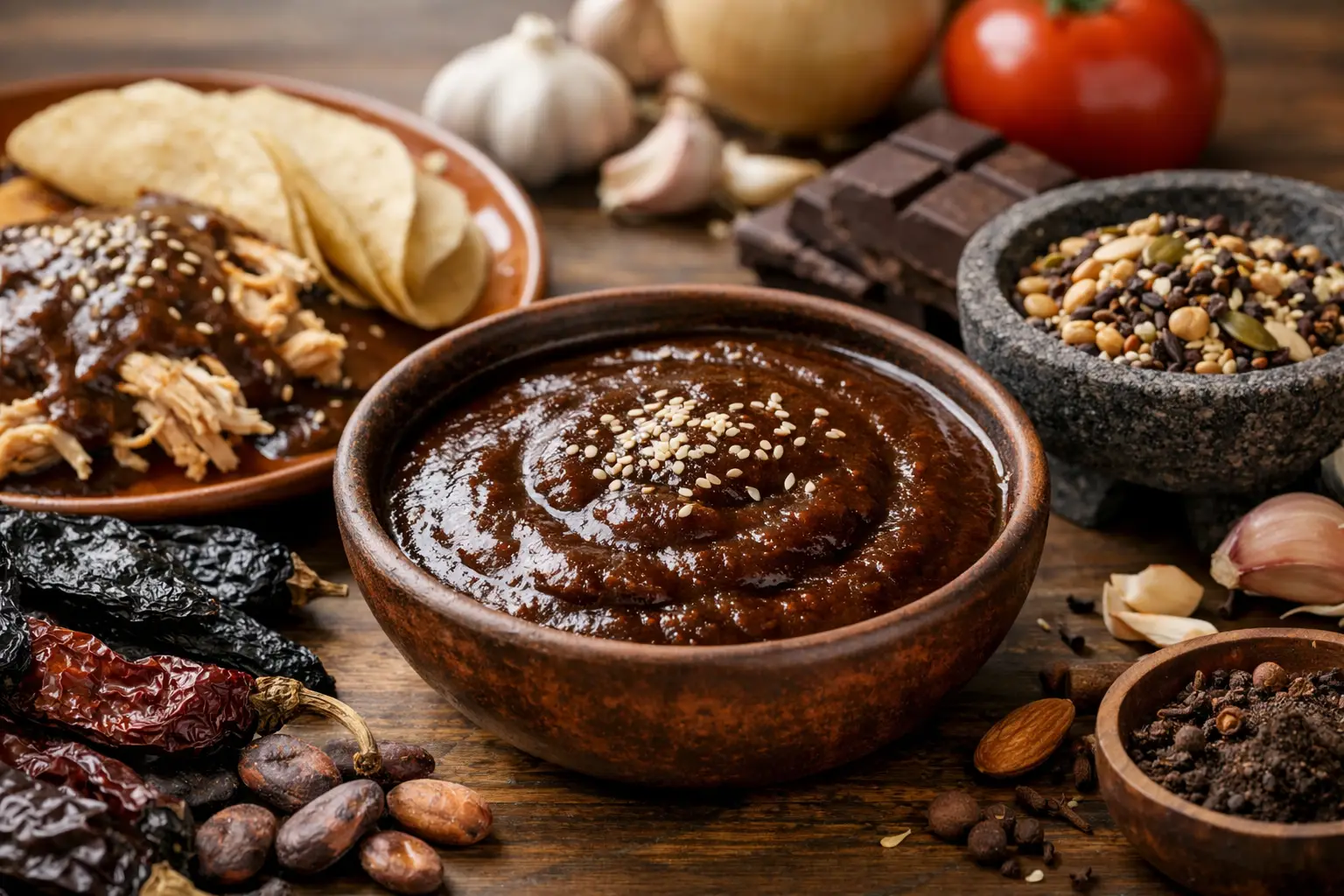
A spoonful of good mole can taste like several meals happening at once: toasted chile, ripe fruit, warm spice, roasted nuts, a whisper of bitterness, and a deep savor that stays with you. So, what is mole made of? The honest answer is not one tidy ingredient list. Mole is a family of Mexican sauces built from chiles and layered with ingredients that vary by region, cook, season, and the dish on the table.
That is exactly why mole deserves more than the usual shortcut description: “a spicy chocolate sauce.” Chocolate may appear in some famous moles, especially mole poblano, but it is rarely the star. The real magic is balance, developed with serious patience and the kind of knowledge often passed from one generation of cooks to the next.
What Is Mole Made Of, Exactly?
Most moles begin with dried chiles. Ancho, mulato, pasilla, guajillo, and chipotle are common examples, although the selection changes dramatically across Mexico. Each chile contributes something different. One may bring raisiny sweetness, another earthy depth, another a clean red-fruit brightness, and another smoke or heat.
The chiles are typically stemmed, seeded as needed, toasted or briefly fried, then softened in water or broth. They are only one part of the flavor architecture. A cook may add tomatoes or tomatillos, garlic, onion, herbs, spices, nuts, seeds, dried fruit, tortillas, bread, plantain, or masa. Those ingredients are blended into a paste, then cooked slowly in fat and thinned with broth until the sauce becomes glossy, fragrant, and completely integrated.
This process explains why a mole can have an astonishingly long ingredient list without tasting cluttered. The goal is not for guests to identify every clove, sesame seed, or chile. The goal is harmony. A great mole feels rounded: sweet but not dessert-sweet, spicy but not simply hot, rich but still alive on the palate.
The ingredients often found in mole
While every recipe has its own personality, these are the building blocks you are likely to encounter:
- Dried chiles provide color, aroma, gentle fruitiness, earthiness, and heat.
- Seeds and nuts such as sesame, pumpkin seeds, peanuts, almonds, or pecans add body and toasted richness.
- Aromatics and produce including garlic, onion, tomato, tomatillo, and sometimes plantain create sweetness, acidity, and depth.
- Spices and herbs may include cinnamon, clove, black pepper, allspice, oregano, cumin, avocado leaf, or hoja santa.
- Thickeners like stale bread, tortillas, crackers, or masa help give the sauce its signature velvety texture.
- Cacao can bring bitterness, aroma, and richness, but usually in a supporting role rather than a dominant one.
Not every mole uses every category. A green mole might lean on tomatillos, pepitas, fresh herbs, and green chiles, with no chocolate at all. A coastal mole may include ingredients shaped by local agriculture and pantry traditions. The recipe is a map of place.
Mole Is NOT a “Chocolate Sauce”
The idea that all mole is chocolate sauce is one of Mexico’s most persistent culinary misunderstandings. It is easy to see why it happened. Mole poblano, perhaps the best-known mole outside Mexico, often includes cacao not Chocolate. Its dark color also encourages the assumption.
But cacao in mole functions much like a small amount of cocoa might in a savory stew: it can add a roasted, faintly bitter edge and help bind other flavors together. If you taste a finished mole and think first of candy, the balance has probably wandered too far.
The word mole comes from the Nahuatl word molli, broadly meaning sauce or mixture. That definition leaves room for enormous variety. Mexico has countless moles, and many are far lighter, greener, redder, tangier, or hotter than the dark, celebratory version many visitors expect.
A Quick Tour of Mexico’s Mole Traditions
Oaxaca is often called the land of seven moles, although the state’s true mole repertoire is much broader than that famous phrase suggests. You may encounter mole negro, complex and dark; mole coloradito, red and warmly spiced; mole rojo; mole amarillo; mole verde; chichilo; and manchamanteles, a name that playfully translates to “tablecloth stainer.” Wear the stain proudly. You have been warned.
Mole poblano from Puebla is a landmark dish, traditionally served over turkey or chicken and often finished with sesame seeds. It can include several chiles, nuts, seeds, spices, dried fruit, and chocolate. Its depth makes it a natural centerpiece for holidays, family gatherings, and special occasions.
Then there are moles that surprise first-time travelers. Pipianes feature ground pumpkin seeds or other seeds and can be green or red, with a brighter, nutty personality. Mole verde is fresh and herbaceous. Mole de olla is a brothy, chile-forward stew rather than a smooth, thick sauce. In San Miguel de Allende and the wider Bajío, cooks may shape mole with regional chiles, local produce, family technique, and the rhythm of the season.
No single version is the “real” mole while the others are variations. They are all real. Mexican cuisine is not a fixed museum display. It is a living set of traditions, adapted lovingly in home kitchens, market stalls, and serious restaurant kitchens every day.
The Technique Is an Ingredient Too
Ask a Mexican cook for a mole recipe and you may receive measurements. Ask for the secret, and you are more likely to hear about the process: how dark to toast the sesame seeds, when to turn the chiles so they do not burn, whether the sauce needs more broth, or how long it must simmer before the flavors stop introducing themselves separately and begin speaking as one.
That attention is crucial. Toasting gives ingredients depth, but crossing the line into burning can introduce harsh bitterness. Frying the components adds richness, but too much oil can weigh down the finished sauce. Blending must be thorough, often followed by straining for silkiness. Then comes the slow cooking, where the raw edges soften and the sauce gains its unmistakable perfume.
It is also why mole takes time. A home cook may make a large batch for a celebration, then freeze some for another day. A restaurant may prepare its base carefully over hours or even days. Shortcuts exist, and good prepared mole pastes can be useful, especially for busy travelers who want to cook after returning home. But a scratch-made mole is a lesson in patience you can taste.
How Mole Is Served
Mole is most often served with chicken, turkey, pork, or enchiladas, accompanied by rice and warm tortillas. Yet it is wonderfully versatile. Some moles shine with roasted vegetables, mushrooms, eggs, tamales, or grilled seafood. The best pairing depends on the sauce itself.
A dark, rich mole may love turkey or chicken because the meat gives it a calm canvas. A bright green pipián can make squash, potatoes, or pork sing. If you see mole on a menu, do not assume it will be heavy. Ask which mole it is, what is in it, and what the chef serves with it. That small conversation often leads to the most memorable plate of your trip.
For guests with allergies, mole is also a dish worth discussing before ordering. Nuts, peanuts, sesame, wheat-based thickeners, and chocolate can all appear, and recipes vary from kitchen to kitchen. A knowledgeable chef will be glad you asked. The same is true for heat level: dark color does not automatically mean fiery chile heat.
Tasting Mole in San Miguel de Allende
Mole makes much more sense when you taste it with someone who can point out the clues in the bowl. Is that nuttiness sesame or pepita? Is the sweetness from fruit, caramelized onion, or a touch of chocolate? Is the chile smoky, fruity, or earthy? A thoughtful tasting turns a delicious sauce into a story about markets, migration, celebrations, and the cooks who keep regional flavors alive.
At Unforgettable Culinary Traditions, that is the pleasure of a focused mole experience: you are not just checking a famous dish off a list. You are learning why two moles can look similar yet taste completely different, and why a family recipe may never be written down exactly.
The next time a server places mole in front of you, take one bite before reaching for the salt or hot sauce. Let it unfold. Somewhere in that spoonful are chiles dried under Mexican sun, seeds toasted with care, a cook’s practiced judgment, and a tradition generous enough to keep changing while still tasting unmistakably like home.



Leave a Reply