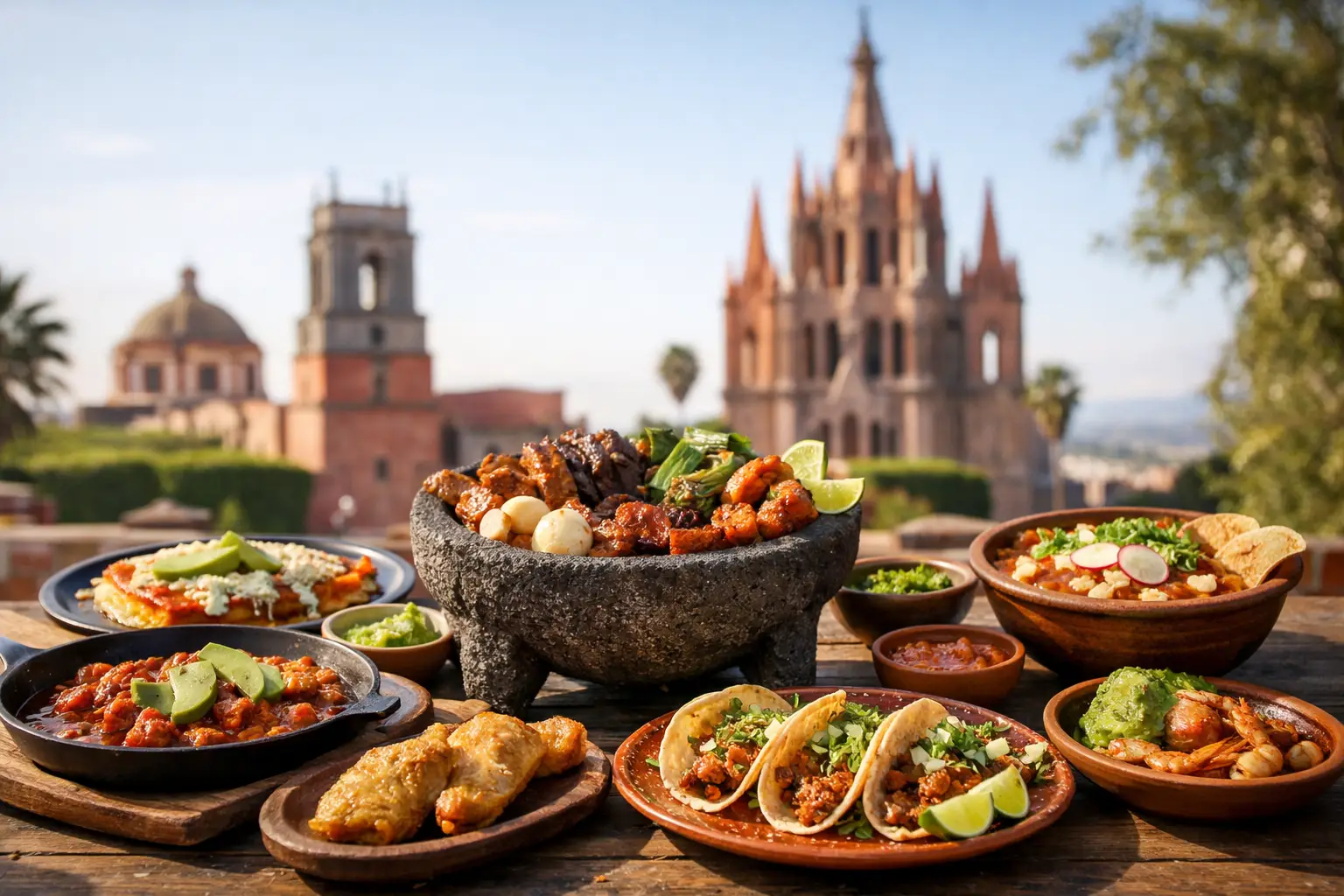
The first bite of a proper enchilada can tell you more about San Miguel than a day spent admiring its pink stone churches. San Miguel de Allende dishes are generous, colorful, and full of the practical wisdom that makes Mexican cooking so thrilling: use what the season gives you, respect a good sauce, and never underestimate the power of a warm tortilla.
This is not a city with one rigid, museum-piece menu. Its food reflects the traditions of Guanajuato, the fertile Bajío region, family kitchens, market stalls, and talented cooks who have brought their own regional flavors to town. Here are the dishes worth seeking out, along with a little local context to help you order with confidence.
San Miguel de Allende Dishes to Put on Your List
1. Enchiladas mineras
If there is one dish to order when you want a taste of Guanajuato, make it enchiladas mineras. Corn tortillas are dipped in a red chile sauce, filled simply, then topped with potatoes, carrots, cheese, and often chicken. The name means “miners’ enchiladas,” a nod to the workers who needed a filling, affordable meal.
They are not meant to be delicate. A good plate is saucy, satisfying, and slightly messy in the very best way. The heat should be flavorful rather than punishing, with the earthy sweetness of dried chiles balancing the salty cheese.
2. Fiambre
Fiambre is one of San Miguel’s most distinctive traditional preparations, and it surprises people expecting a hot, chile-forward entrée. It is a composed cold salad that can include chicken, beets, potatoes, carrots, avocado, fruit, herbs, and a bright vinaigrette. Recipes vary from family to family, which is exactly the point.
Some versions are more savory, others lean sweet and tangy. You may see fiambre served around special occasions or as a refreshing lunch when the afternoon sun is high. Think of it as a dish with a little celebration built into every forkful.
3. Tacos al pastor
Yes, tacos al pastor are found throughout Mexico. But that does not mean you should skip them in San Miguel. A skilled taquero shaves thin slices of chile-marinated pork from the vertical spit, catches them on a warm corn tortilla, and finishes the taco with onion, cilantro, and pineapple.
The key is balance. The pork should have a lightly crisp edge, the pineapple should be juicy rather than overwhelming, and the salsa should bring life without hiding the meat. One taco is a snack. Two or three is proper research.
4. Cecina tacos
Cecina is thinly sliced, salted beef, often grilled quickly and folded into a tortilla with nopales, cheese, avocado, or salsa. It is straightforward food, but straightforward does not mean ordinary. The quality of the meat, the warmth of the tortilla, and the seasoning of the salsa all matter.
This is a smart choice for travelers who want something deeply Mexican but not especially spicy. Ask for a salsa recommendation before you take your first bite. Local cooks are usually delighted to guide you toward their favorite.
5. Carnitas
Carnitas begin with pork cooked slowly in its own rendered fat until tender, rich, and beautifully crisp at the edges. In central Mexico, carnitas are often served by weight, which means you can choose from different cuts and textures depending on how adventurous you feel.
For a classic taco, add chopped onion, cilantro, a squeeze of lime, and a spoonful of salsa. If the vendor offers cueritos, pickled pork skin, try a little. It adds a tangy, silky contrast that turns a great taco into a memorable one.
6. Gorditas
A gordita is a thick corn masa round, cooked on a griddle or fried, then split open and stuffed. The name means “little chubby one,” which is both affectionate and accurate. Fillings can range from beans and cheese to shredded meats, potatoes, chicharrón prensado, or vegetables in sauce.
They are ideal for a market breakfast or a casual lunch because they are portable, affordable, and unexpectedly filling. A gordita also reminds us why corn matters so much in Mexican cuisine: masa is never just a wrapper. It has flavor, aroma, texture, and history of its own.
7. Chiles rellenos
A chile relleno can be mild, rich, comforting, and dramatic all on one plate. A poblano pepper is roasted, peeled, filled with cheese or meat, and often served with a tomato sauce. Some cooks coat it in a fluffy egg batter; others serve a lighter version without it.
This is one of those dishes where personal preference matters. If you love the soft, savory richness of egg-battered chiles, seek the traditional capeado style. If you prefer a cleaner, vegetable-forward plate, ask how the restaurant prepares theirs.
8. Mole
Mole is not one sauce. It is a vast family of sauces built from dried chiles, spices, seeds, nuts, fruit, herbs, and sometimes chocolate. In San Miguel, you may encounter mole in a home-style lunch, an elegant restaurant, or a focused tasting where every spoonful reveals another layer.
The best way to approach mole is slowly. Taste it before adding anything else. Notice the chile, then the toasted seeds, then the sweetness or bitterness that arrives later. A great mole does not need to shout. It lingers.
9. Pozole
Pozole is a generous bowl of hominy corn simmered for hours in a deeply seasoned broth, often with pork or chicken. It arrives with its supporting cast: shredded cabbage, radishes, onion, lime, oregano, and chile salsa. You build the bowl exactly as you like it.
Red pozole gets its color from dried red chiles, while white versions are lighter in appearance but no less comforting. It is especially wonderful in the evening, when a cool highland breeze makes a steaming bowl feel like an invitation to stay awhile.
10. Tumbagones
For something sweet with true San Miguel character, look for tumbagones. These delicate rolled cookies are traditionally flavored with orange and dusted with sugar. Their shape is said to resemble the gold rings once called tumbagas, giving the pastry its memorable name.
They are crisp, light, and dangerously easy to keep eating. Bring a box back to your hotel, share them over coffee, and do not be surprised if they disappear before breakfast.
11. Atole and hot chocolate
Morning in San Miguel can be cool, especially during fall and winter. Atole, a warm masa-based drink, is the answer. It can be flavored with vanilla, chocolate, cinnamon, strawberry, or seasonal fruit, and it has a gently thick, comforting texture.
Mexican hot chocolate is another worthy morning companion. It is often frothed with a molinillo, a wooden whisk that creates a fragrant cap of foam. Pair either drink with pan dulce and give yourself permission to linger.
12. Seasonal nopales and xoconostle
Nopales, the tender paddles of the prickly pear cactus, appear in salads, tacos, stews, and alongside grilled meats. Their bright, green flavor has a pleasant tang, while xoconostle, a tart cactus fruit, adds a sharp, citrus-like note to sauces, salsas, and broths.
These ingredients are a beautiful reminder that Mexican cuisine is rooted in place. When you see them on a menu, order them. They offer a taste that cannot be replicated by simply adding another bottle of hot sauce.
How to Eat Well Without Chasing Tourist-Trap Menus
Start with the question, “What do you recommend today?” rather than hunting only for familiar dishes. The answer may lead you to a stew that is made once a week, a salsa prepared from market chiles that morning, or a dessert your server remembers from childhood. That is where the good stories live.
Pay attention to timing, too. Breakfast belongs to tamales, eggs, atole, and pan dulce. Lunch is the big meal for many Mexican families, making it the right moment for enchiladas, mole, fiambre, or a full plate of chiles rellenos. Tacos, pozole, and other street-food favorites shine after dark, when San Miguel becomes lively and everyone seems to have an opinion about the best salsa.
And do not confuse “authentic” with uncomfortable. Good local food can be served in a market stall, a longtime family restaurant, or a polished dining room. What matters is care: fresh tortillas, well-seasoned sauces, a cook who knows their ingredients, and a meal that makes sense in its setting.
A chef-led experience with Unforgettable Culinary Traditions can add the stories behind the plate, from proper taco technique to the generations of cooks who preserve these flavors. But wherever you eat, arrive curious, ask a question, and leave room for one more taco. San Miguel has a delicious way of rewarding that decision.



Leave a Reply