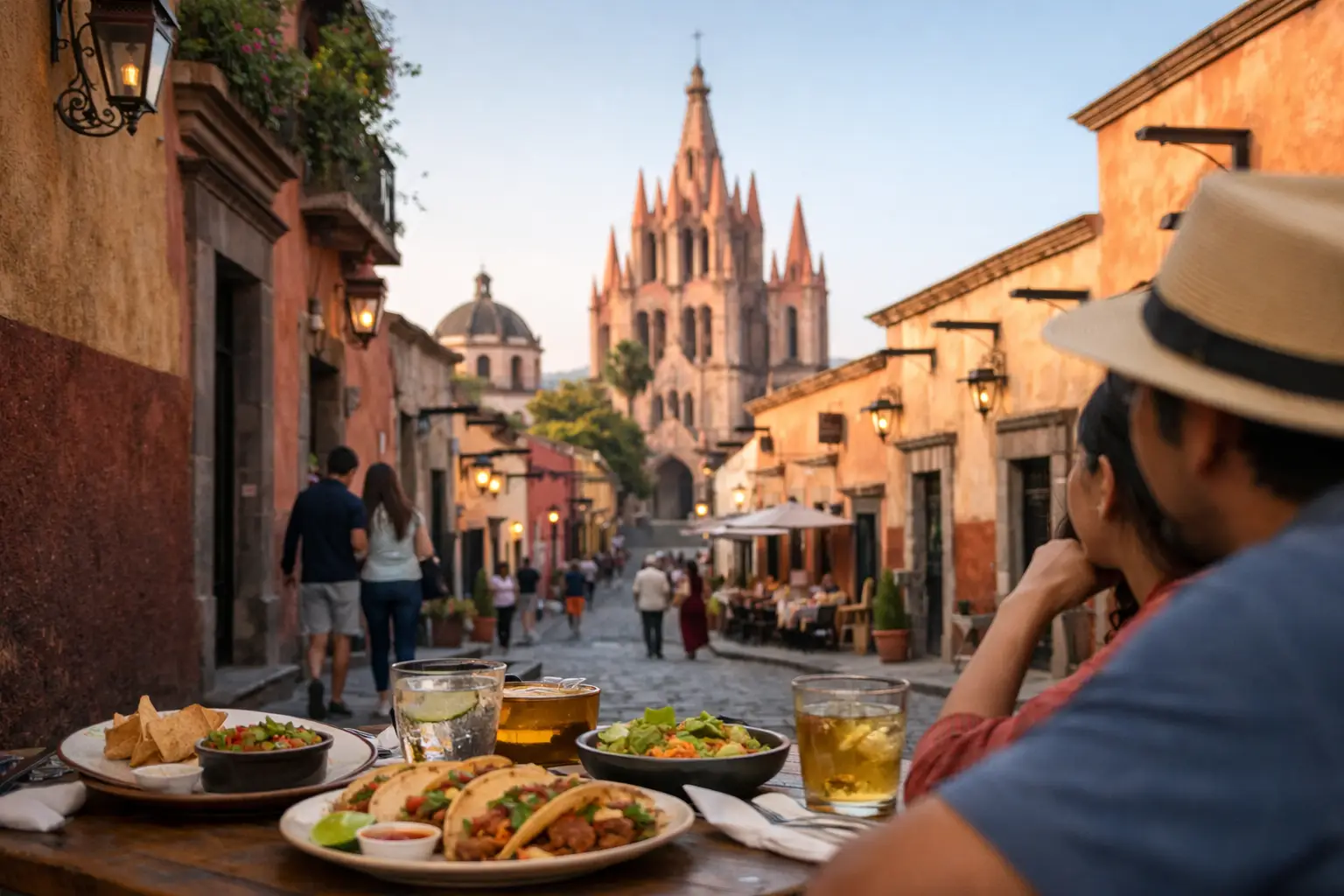

If you are asking, “where do the locals eat in san miguel de allende?” the honest answer is not one restaurant name. Locals eat according to the hour, the neighborhood, the occasion, and the craving. A steaming bowl of pozole on a Sunday, chilaquiles at a busy morning counter, tacos after an evening with friends, and a long family lunch can all be part of the same delicious week.
San Miguel has earned its reputation for beautiful restaurants, rooftop cocktails, and polished international dining. Those places can be wonderful. But the city’s everyday food story is written in mercados, family-run fondas, tiny kitchens with a short menu, and taco stands where the salsa is made with serious confidence. The best local meals are often the ones that feel busy, specific, and completely unbothered by trends.
Where Locals Eat in San Miguel de Allende
The first local secret is this: do not hunt for a single “authentic” place as if San Miguel’s food culture were frozen in time. Mexican cooking is alive, regional, and personal. From traditional moles and handmade tortillas to family recipes and everyday dishes, Flavors with Love for Mexico is designed to introduce you to the people, flavors, and stories that give Mexican food its history, character, and sense of place.
Start with the city’s markets. Mercado Ignacio Ramírez and Mercado San Juan de Dios are not just places to buy produce, chiles, flowers, and household goods. They are living kitchens. You may find breakfast counters serving eggs in salsa, beans, fresh tortillas, and coffee, along with stalls making quesadillas, gorditas, and other antojitos to order.
At a market stall, watch what people are ordering. A line of workers, families, and regulars is usually more useful than a glossy sign. Ask what is made fresh that day, then trust the answer. If the cook suggests a stew, a filling, or a salsa with a warning smile, you are in good hands.
A fonda is another essential stop. These modest, often family-operated restaurants focus on comida corrida, a set midday meal that may include soup, rice, a main dish, tortillas, and agua fresca. The menu changes with what is available and what the kitchen wants to cook. That is the point.
Lunch is the great local meal in much of Mexico, so arrive hungry. Between roughly 1:00 and 3:30 p.m., offices empty, families gather when they can, and dining rooms fill with regulars who know exactly which table they prefer. Dinner can be lighter or later, especially after an evening paseo through the historic center.
Breakfast: Follow the Comal
In the morning, locals often look for food that is comforting, filling, and ready before the day gets moving. Chilaquiles are a favorite, but they are not all the same. Some are soft and saucy, others retain a little crunch. They may arrive with green or red salsa, beans, eggs, chicken, crema, queso fresco, and onions.
Also look for huevos a la mexicana, scrambled eggs with tomato, onion, and chile; enfrijoladas bathed in bean sauce; and freshly cooked tortillas folded around cheese, squash blossoms, or a savory guisado. A proper breakfast counter does not need fancy decor. It needs a hot comal, good salsa, and a cook who has made the dish hundreds of times.
Coffee and sweet bread have their own rhythm here, too. A neighborhood bakery can be the perfect stop for pan dulce, while a simple café may serve strong coffee alongside breakfast that feels far more generous than its price suggests. Go early for the best selection and accept that the popular pastries disappear first.
Midday: The Fonda Knows Best
For a visitor trying to eat like a local, comida corrida is one of the smartest choices in town. It gives you a window into everyday Mexican home-style cooking without requiring a complicated order. You might encounter albóndigas in broth, chicken in chipotle sauce, calabacitas with corn, pork in salsa verde, or lentils cooked until deeply comforting.
The trade-off is choice. A fonda’s menu may be limited to two or three main dishes, and the favorite might sell out. That is not bad service. It is a kitchen cooking a finite amount of food with care. Arrive earlier, be flexible, and order what the house is proud to serve.
This is also where you begin to understand that Mexican food is not only tacos. It is soups, beans, sauces, seasonal vegetables, braises, masa, and the daily labor of feeding a family well. A simple plate can carry generations of technique.
Evening: Tacos, But Make Room for More
When the sun drops and San Miguel’s streets begin to glow, taco stands come into their own. Locals gather after work, after shopping, after drinks, or simply because the aroma of grilled meat and warm tortillas is impossible to ignore. The best approach is to order a few tacos first, then add more if you find your favorite.
Our Taco and tequila experience in San Miguel de Allende, is a great way to discover some of the city’s favorite taco spots, where you can enjoy tacos al pastor, carne asada, chorizo, suadero, and other slow-cooked meats. Offerings vary by stand, and in San Miguel de Allende, you should also keep an eye out for regional specialties and fillings shaped by the state’s own culinary traditions. Ask which salsa goes best with each taco. This simple question can save your taste buds or lead to a very memorable evening.
Proper taco eating is not a formal ceremony, but there are a few useful rules. Use the lime if it is offered. Start carefully with the salsa, especially the smooth-looking green one. Keep the second tortilla if the taco needs reinforcement. And please, do not be shy about eating with your hands. A taco on a knife and fork is having a hard enough day already.
Eat Beyond the Historic Center
The historic center is easy, beautiful, and packed with excellent choices. It is also not the entire city. To find more everyday dining, pay attention to neighborhoods beyond the postcard streets, where residents shop, commute, pick up bread, and meet relatives for lunch.
Places near busy streets, markets, schools, and residential areas often serve a more local crowd because they are built around repeat customers rather than one-time visitors. That does not mean every restaurant outside the center is better, nor does it mean a central restaurant cannot be deeply rooted in San Miguel. It simply means geography changes the rhythm, the price point, and the menu.
If you are uncertain about where to go, ask a shopkeeper, your driver, or the person at your hotel desk a specific question. Instead of asking for “the best Mexican restaurant,” ask where they would take a visiting cousin for breakfast, where they buy carnitas on the weekend, or where they go for a quick lunch. Specific questions lead to much better answers.
How to Order With Confidence
You do not need perfect Spanish to eat well in San Miguel. A warm greeting, a little patience, and curiosity go far. Say hello when you arrive. Ask, “¿Qué recomienda?” for a recommendation. If you have dietary needs, explain them clearly and kindly, recognizing that cross-contact can be difficult in compact kitchens.
Vegetarians can often enjoy quesadillas, enfrijoladas, nopales, beans, mushrooms, and vegetable guisados, but ask whether beans or sauces are made with meat or lard. Travelers with celiac disease, severe allergies, or strict dietary requirements should be especially direct. Corn tortillas are naturally gluten-free, but preparation surfaces, fillings, sauces, and fryer oil can complicate the picture.
Bring cash for small stalls and markets. Keep your expectations flexible. The chair may be plastic, the menu may be handwritten, and the service may be focused on feeding a lunchtime rush rather than explaining every ingredient. That is when a little culinary context makes all the difference.
A chef-led experience such as Unforgettable Culinary Traditions can be a joyful first step for travelers who want to taste widely while learning what they are eating, how it is prepared, and why it matters to San Miguel families. After that, you will recognize the difference between a generic plate and a regional food tradition speaking in its own voice.
The most rewarding local meal may not be the one with the best view. It may be the bowl of soup you did not know to order, the tortilla made moments ago, or the salsa that makes everyone at the table stop talking for a second. Leave room in your itinerary for that kind of surprise.


Leave a Reply