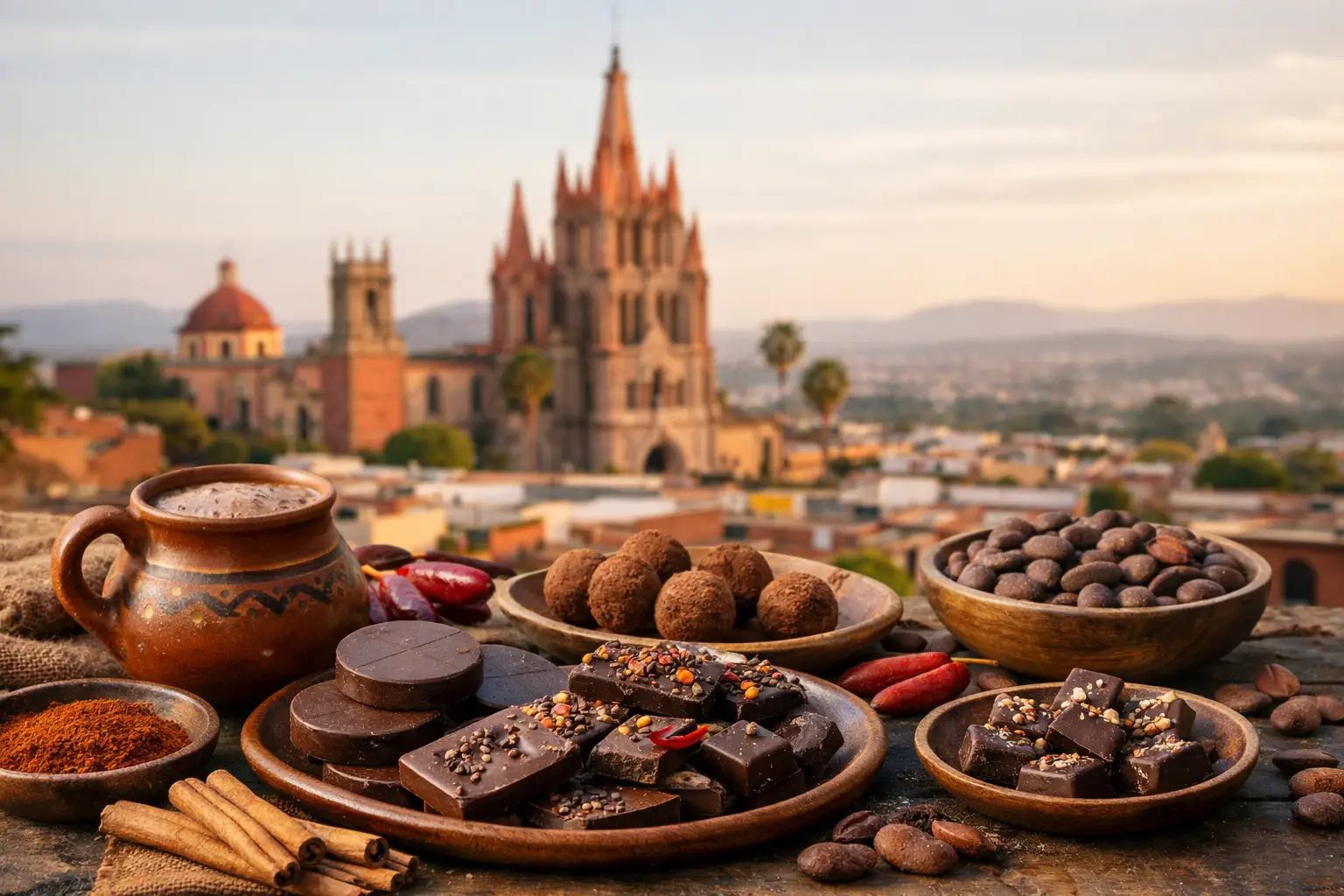
A cup of Mexican chocolate should make you pause before you take the first sip. There is the aroma of toasted cacao, of course, but perhaps also cinnamon, a little vanilla, or the warm, earthy fragrance of freshly ground nuts. The texture may be lightly grainy rather than silky smooth. That is not a mistake. It is part of the point.
A mexican chocolate tasting is not simply a search for the darkest bar or the highest cacao percentage. It is a chance to understand cacao as Mexico has enjoyed it across centuries: as a drink, a ceremonial food, an everyday comfort, a market ingredient, and a partner to dishes as complex as mole. In San Miguel de Allende, where old-world streets meet a lively community of chefs, artisans, and market vendors, it is a delicious way to look beyond the souvenir shop.
What Makes Mexican Chocolate Different?
Many American travelers arrive expecting chocolate to be glossy, sweet, and designed to melt perfectly on the tongue. Much Mexican chocolate follows a different tradition. It is often made for drinking, with cacao ground alongside sugar and spices, then whisked into hot water or milk until a crown of foam rises at the top.
The foam matters. Long before electric frothers, cooks used a wooden molinillo, rolling the carved whisk between their palms to aerate the drink. The sound and movement are as familiar in many Mexican kitchens as the fragrance of chocolate itself. A proper cup can feel rustic, lively, and wonderfully comforting.
Traditional chocolate discs or tablets are also frequently more textured than European-style chocolate. Stone grinding can leave tiny particles of sugar or cacao behind. Some people love that gentle grit because it signals a less industrial process; others prefer a smoother, more modern style. Neither preference is wrong. The pleasure is in recognizing what the maker intended.
Cinnamon is common, but it is not the only flavor that belongs in the conversation. Depending on the recipe and region, you may find vanilla, almonds, peanuts, anise, chile, or floral notes in the cacao itself. Mexican chocolate is not one fixed flavor profile. It is a broad family of traditions shaped by local ingredients, household recipes, and the hands doing the grinding.
How to Taste Mexican Chocolate With Curiosity
Treat the first taste as an introduction, not a verdict. If you are served a chocolate drink, notice its aroma before stirring. Is the cacao deeply roasted? Does the cinnamon arrive first? Is there a nutty richness, a note of dried fruit, or a hint of chile warmth at the finish?
Then take a small sip and let it sit on your palate for a moment. Traditional drinking chocolate can be sweeter than a dark chocolate bar, yet its flavor may still be more complex than expected. The sugar rounds out cacao’s natural bitterness, while the spice keeps the drink from feeling flat.
With a solid chocolate tablet or bar, let a small piece melt slowly. Notice whether the texture is smooth, sandy, creamy, or crumbly. Ask whether the flavor is primarily cacao-forward or built around spices and sugar. A chocolate intended for hot drinks may not be the ideal bar to snack on straight from the package, but that does not make it inferior. It simply has another purpose.
A thoughtful tasting also pays attention to finish. Some chocolates leave behind roasted coffee notes; others bring cinnamon, toasted nuts, or fruit. A chile-infused chocolate should offer warmth and length, not punish your mouth. If the chile overwhelms every other flavor, you are tasting heat more than cacao.
Mexican Chocolate Tasting: From Bean to Cup
Cacao has deep roots in Mesoamerica. For ancient peoples, it was valued as food, drink, tribute, and ritual offering. The chocolate they consumed was not the sugary hot cocoa many of us know today. It could be bitter, spiced, and sometimes combined with ingredients such as chile or flowers. It was often frothed and served as a beverage.
After the Spanish arrival, cacao met sugar, cinnamon, and other ingredients that changed chocolate’s course in Mexico and around the world. That history lives in a simple cup of chocolate de mesa. When you taste it, you are tasting an ingredient shaped by Indigenous knowledge, colonial exchange, regional agriculture, family kitchens, and contemporary makers.
This is why context matters. It is easy to call something “authentic” because it looks rustic or comes in colorful packaging. The better question is: authentic to whom, and for what use? A family recipe from Oaxaca, a contemporary bean-to-bar maker, and a packaged tablet designed for weekday hot chocolate can all be genuinely Mexican. They are just telling different stories.
In a good tasting, the guide or maker should be able to explain those stories without turning the experience into a lecture. You should leave knowing why one chocolate is ground with cinnamon, why another is meant for a molinillo, and why cacao behaves differently in a drink than in a refined confection.
Pairings That Let Cacao Speak
Mexican chocolate is generous at the table, but it does not need a parade of sweet desserts around it. Often, the most memorable pairings are simple. Fresh pan dulce alongside hot chocolate creates a beloved breakfast or merienda moment. A buttery concha, a flaky pastry, or a humble piece of sweet bread lets the cacao remain center stage.
For something more savory, chocolate belongs in the larger world of Mexican sauces, especially mole. Here, chocolate is not meant to make a sauce taste like candy. It may add bitterness, body, roasted depth, or a quiet bridge between chiles, seeds, spices, and fruit. Not every mole contains chocolate, and not every chocolate belongs in mole. The balance depends on the recipe.
Tequila and mezcal can also be interesting companions when poured thoughtfully. Choose a small sip after the chocolate rather than mixing flavors all at once. A bright, herbaceous tequila may lift cacao’s roasted notes, while a smoky mezcal can make it feel deeper. But strong spirits can easily dominate delicate chocolate, so this pairing works best with modest pours and an unhurried pace.
Where Travelers Get It Wrong
The most common mistake is assuming that Mexican chocolate must taste like a novelty version of American candy, loaded with chile or cinnamon for dramatic effect. Great chocolate does not need theatrics. Its flavors should feel integrated, whether it comes from a market stall, a neighborhood kitchen, or a serious craft producer.
Another mistake is judging every chocolate by European standards of refinement. A little graininess in chocolate de mesa can be expected. A bold cinnamon note can be traditional. A drink made with water instead of milk may taste more direct and cacao-forward. The question is not whether it mimics Swiss chocolate. The question is whether it is delicious on its own terms.
Finally, do not rush. Chocolate tasting is one of those small pleasures that becomes much better when you slow down enough to notice the details. San Miguel de Allende offers plenty of beautiful things to photograph, but the real memory may be the person who explains how her family makes chocolate, the sound of a molinillo spinning, or the unexpected nuttiness in a warm cup shared around a table.
A Better Way to Taste in San Miguel de Allende
The most rewarding tastings connect flavor to place. Visit a market and you may see chocolate sold in rounds or blocks, ready to be taken home and prepared in a kitchen. Sit with a chef and you can begin to understand how cacao moves from a breakfast drink to a sauce with layers of chile and spice. Speak with an artisan, and a package becomes more than a package.
At Unforgettable Culinary Traditions, that is the spirit behind tasting Mexico: you do not just taste Mexico – you understand it. A chocolate tasting should feel just as personal. It should make room for questions, preferences, and a little surprise, whether you are a lifelong dark-chocolate devotee or someone who usually reaches for milk chocolate.
When you find a chocolate you love, take home the memory before the tablet. Remember how it was served, what you smelled first, and who taught you to whisk the foam. Those details are what turn a sweet souvenir into a story worth sharing.


Leave a Reply