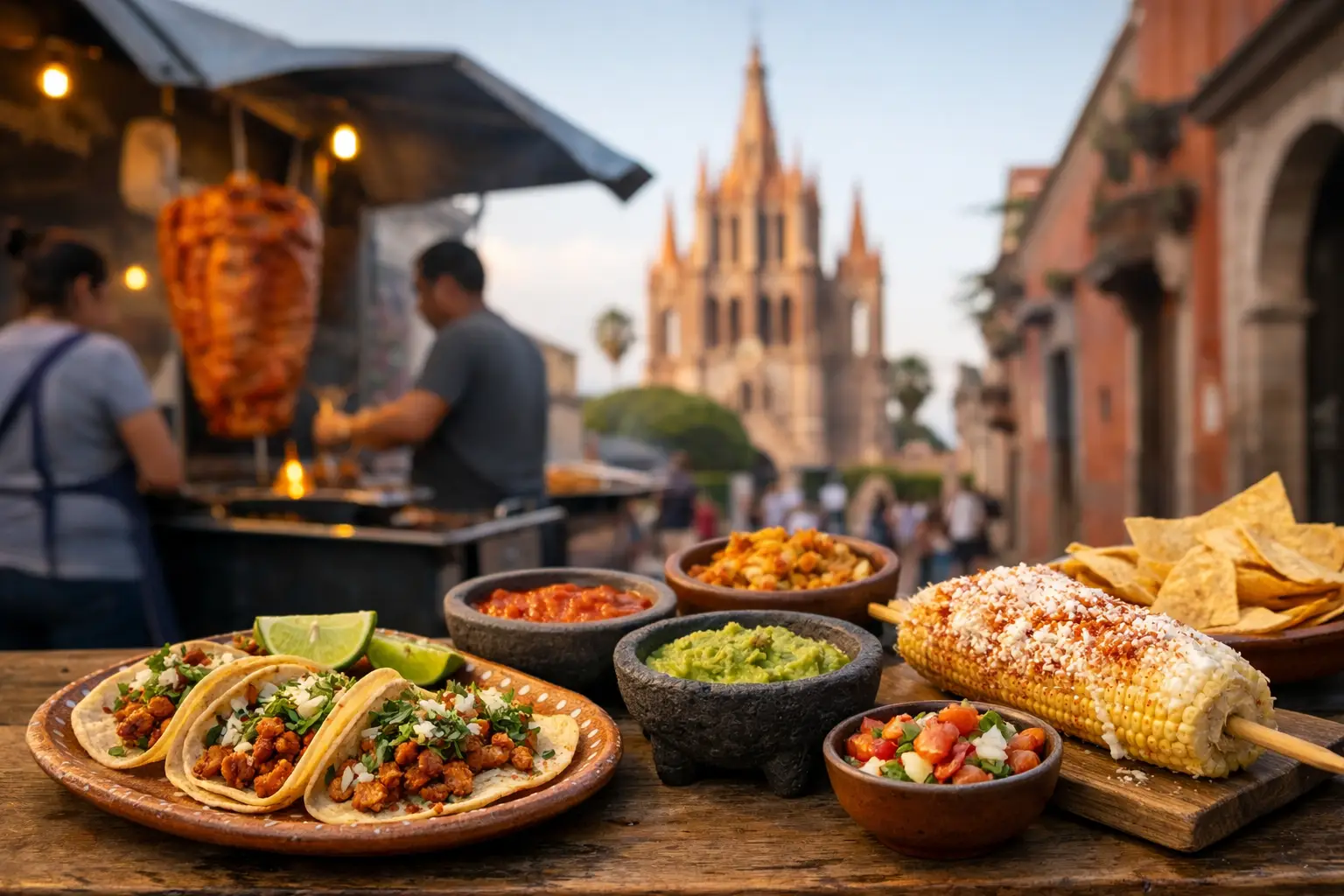
A taco handed across a busy counter can tell you more about a city than a polished menu ever could. Mexican street food is fast, fragrant, inexpensive, and wonderfully direct, but it is never accidental. Behind that corn tortilla, bubbling pot, or salsa-stained napkin are family recipes, seasonal ingredients, early-morning prep, and cooks who know exactly when the comal is hot enough.
For visitors to San Miguel de Allende, street food is also one of the most enjoyable ways to move beyond the obvious. You may recognize tacos, but the real pleasure is learning why one salsa is smoky, why another gets its gentle sweetness from roasted vegetables, and why the person beside you has ordered a second helping before you have finished your first.
What Mexican Street Food Really Means
Street food does not mean one fixed collection of dishes. It means food made for everyday life: breakfast before work, a mid-afternoon snack, a late-night taco after music and conversation. Some vendors work from carts, some serve from market stalls, and some cook from a tiny open-front kitchen with a few stools along the sidewalk. The setting may be humble, but the technique is often highly specialized.
A good vendor may make only one or two things, and that is usually a fine sign. The cook who spends hours preparing birria, carnitas, tamales, or a single style of taco is not trying to offer everything. They are protecting a method. The best question is not, “What is the most famous thing here?” It is, “What are they making right now that they make beautifully?”
In central Mexico, corn is the quiet foundation of much of this story. Fresh tortillas are not merely a wrapper. They bring aroma, texture, and a lightly toasted flavor that changes with every batch. A handmade tortilla can hold a braised filling, but it can also carry something as simple and perfect as a scoop of beans, crumbled cheese, and salsa.
Start With the Dishes That Teach You the Most
Tacos are the right place to begin, but they are not all alike. A taco al pastor brings pork marinated with chiles and spices, shaved from a vertical spit and often finished with pineapple. Carnitas are pork cooked slowly until tender, then crisped in its own richness. Barbacoa is traditionally slow-cooked meat with a deep, savory character, often enjoyed in the morning with a steaming consommé.
Then there are tacos built around vegetables, cheeses, and eggs. Look for nopales, the tender pads of the cactus, prepared with a pleasantly bright, green flavor. Try a quesadilla and notice that its identity lies in the folded corn tortilla, not in a guarantee of cheese. Depending on the cook and the region, you may need to ask for queso if that is what you want inside.
Tamales deserve patience. Corn dough is seasoned, filled, wrapped in a corn husk or banana leaf, and steamed until soft and aromatic. They are often breakfast food, especially with atole, a warm corn-based drink that can be flavored with chocolate, vanilla, or fruit. A tamal is not designed for speed or spectacle. It is a small package of labor, meant to be unwrapped slowly.
For a snack with crunch, watch for tostadas, sopes, gorditas, and tlacoyos. A tostada starts with a crisp fried tortilla and becomes a platform for beans, meat, seafood, avocado, lettuce, cheese, and salsa. Sopes have a thicker corn base with a pinched edge to hold their toppings. Gorditas are plump corn pockets, often split and filled after cooking. Tlacoyos are oval-shaped masa cakes, sometimes colored blue from heirloom corn and traditionally filled with beans, cheese, or fava beans.
Do not overlook elotes and esquites. Elote is corn on the cob, often dressed with lime, chile, cheese, and crema. Esquites serve those kernels in a cup, usually warm and spoonable. They are joyful, messy, and a perfect reminder that Mexican cooking can turn a familiar ingredient into something completely different through seasoning and texture.
Salsa Is an Invitation, Not a Test of Courage
A salsa bar can make a first-time visitor nervous. There may be several shades of red and green, a creamy pale salsa, pickled vegetables, sliced radishes, limes, and bottles that appear harmless until they are not. The local rule is simple: begin with a small taste.
Color is not a reliable heat scale. A green salsa made with tomatillos and serrano chiles may be bright and fiery. A dark red salsa may taste deeply roasted and relatively mild. One of the most memorable salsas may contain dried chiles, toasted seeds, garlic, and a touch of fruit, delivering complexity before heat. Ask the vendor which one is picante. They will usually tell you, often with a smile that suggests you should respect the answer.
Build your taco in stages. Add salsa, take a bite, and adjust. Lime brightens rich meat. Onion and cilantro add freshness. Pickled carrots or jalapeños bring acidity and heat. There is no medal for turning your lunch into a dare. The goal is balance, and the cook has already done most of the work for you.
How to Eat Mexican Street Food Like a Welcome Guest
Street food has its own easy rhythm. Order what is cooking quickly and what the people who live nearby are ordering. A busy stall with steady turnover is generally more reassuring than a display case where food has been sitting for hours. Go when a dish is naturally at its best: tamales in the morning, a hearty stew around lunchtime, tacos when the evening energy rises.
Carry small bills when possible, be ready to point if your Spanish is still finding its footing, and do not worry about asking what something is. “¿Qué recomienda?” – what do you recommend? – is one of the friendliest phrases you can offer. So is “gracias.” A little curiosity goes a long way.
Tacos are usually eaten with your hands, often using two tortillas for a juicy filling. Hold the taco low and lean forward slightly. This is practical wisdom, not a lack of manners. If a bit of salsa lands on your napkin, you are doing just fine.
For travelers concerned about food safety, use common sense without letting fear erase the experience. Choose vendors with active cooking, clean-looking work areas, and visible turnover. Eat food served hot, and follow your own comfort level with raw garnishes, ice, and drinking water. Dietary needs deserve direct conversation. Tell the vendor about allergies clearly, and understand that a shared griddle, oil, or prep surface can matter. In a language you do not speak fluently, guidance from someone who knows the kitchens can make that conversation much easier.
Mexican Street Food Changes From Block to Block
It is tempting to treat Mexican cuisine as one giant menu, but Mexico is a country of distinct culinary regions. Coastal towns bring seafood into street cooking. Oaxaca is celebrated for moles, tlayudas, and smoky chiles. Yucatán has its own bright, achiote-rich dishes and citrusy seasonings. Central Mexico offers its own traditions of masa, stews, tacos, market snacks, and sweets.
San Miguel de Allende is a wonderful place to taste this living mix. The city welcomes cooks and visitors from many parts of Mexico, while Guanajuato’s own food culture remains close at hand. One meal might introduce you to a time-honored neighborhood specialty; another may show how a chef interprets a regional classic in a new setting. Both can be meaningful when the ingredients, technique, and story are treated with respect.
That is why a thoughtful food experience matters. At Unforgettable Culinary Traditions, the point is not to race from bite to bite or collect tacos like souvenirs. It is to understand who made the dish, what the preparation requires, and how Mexican families keep these flavors alive from one generation to the next.
Save Room for Something Sweet
Street food is not only savory. Look for churros, fried until crisp and dusted with sugar, or warm buñuelos with their delicate crunch. Depending on the season and location, you may find fruit cups with lime and chile, creamy rice pudding, flan, or candies made with milk, coconut, tamarind, or peanuts.
Aguas frescas are equally worth your attention. Jamaica is made from hibiscus flowers and has a tart, ruby-red brightness. Horchata is creamy and cinnamon-scented, though recipes vary. Tamarind offers a sweet-sour tang. These drinks do more than cool you down. They show the Mexican gift for balancing chile, salt, sweetness, acidity, and fragrance in a single meal.
The best street-food memory is rarely the dish you expected to love. It may be the salsa you almost skipped, the vendor’s recommendation, or the stranger who showed you the proper way to fold your taco. Arrive hungry, ask questions, taste with curiosity, and let the next delicious corner of San Miguel surprise you.


Leave a Reply