One Word, Hundreds of Possible Sauces
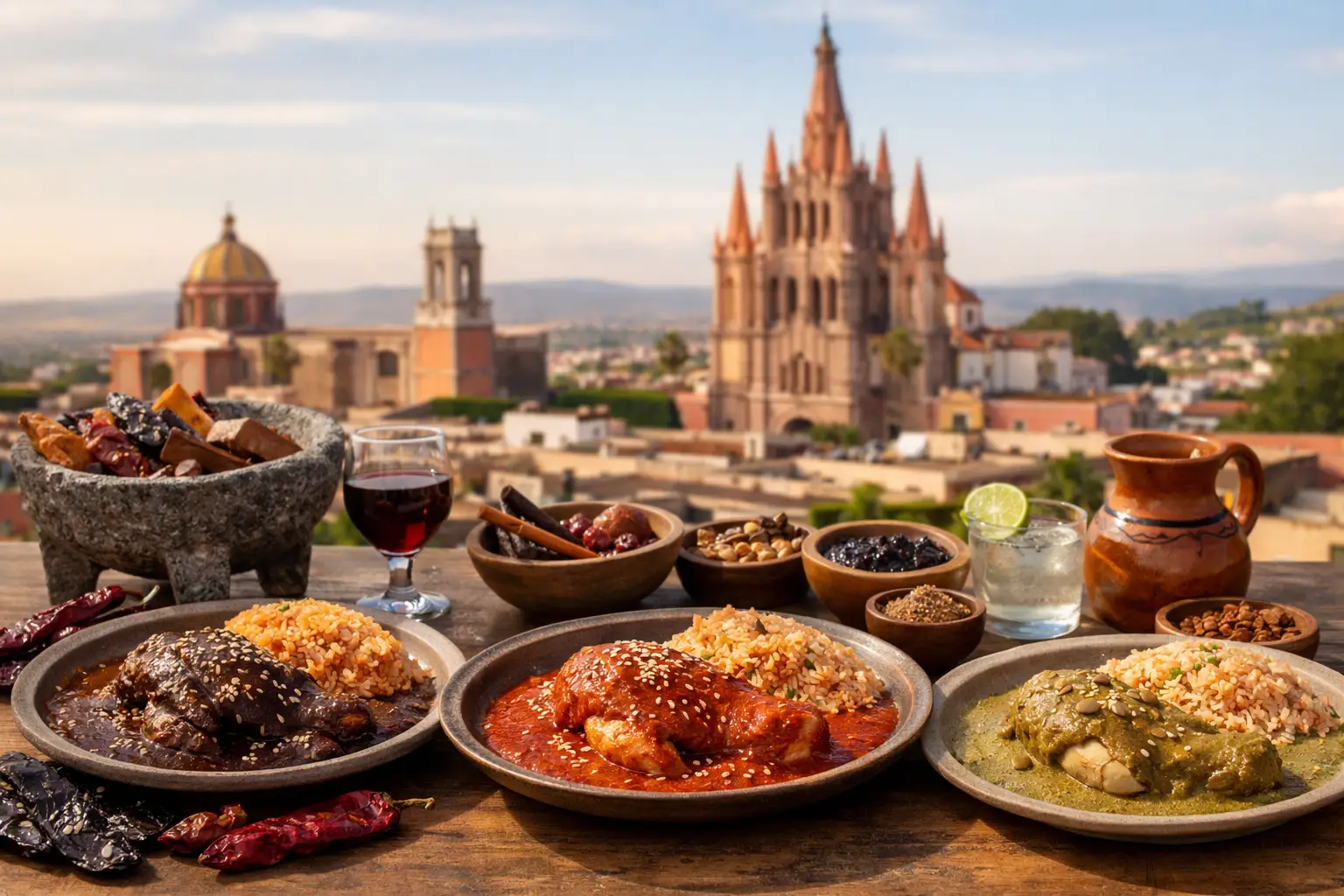
The first spoonful can be a surprise. It may be deep brown and lightly sweet, but then comes the chile heat. Or it may be green, fresh, herbal, and bright with tomatillo. That is the pleasure of a mole tasting tour in San Miguel de Allende: discovering that mole is not one famous Mexican sauce, but an enormous family of sauces with regional personalities, family recipes, and plenty of strong opinions.
For travelers who have only tried mole poblano at a Mexican restaurant back home, a focused tasting can quickly show just how varied mole can be. You taste how toasted chiles bring fruitiness rather than simple heat, how seeds create body, how spices need restraint, and why a little chocolate does not make every mole taste like dessert. More than lunch, it is a delicious introduction to the patience and knowledge held in Mexican kitchens.
What Mole Really Means
The word mole comes from the Nahuatl word mōlli, meaning sauce or mixture. That broad meaning matters. Mexico has countless moles, and no single ingredient list can define them all. Some are silky and dark; others are rustic, fiery, green, yellow, red, or nearly black. They may be served with chicken, turkey, pork, enchiladas, tamales, vegetables, or eggs.
Many visitors associate mole with a long list of ingredients, and that reputation is deserved. A complex mole can involve dried chiles, nuts or seeds, aromatics, fruit, bread or tortilla for thickening, herbs, spices, and a carefully prepared broth. But complexity is not just about quantity. It is about balance. A skilled cook knows when a chile has been toasted enough, when a seed has released its aroma, and when the sauce needs another few minutes of grinding, frying, or simmering.
That is why mole is often connected to celebrations, family gatherings, and serious hospitality. It takes time. It asks cooks to pay attention. And when someone serves you mole, the sauce often carries a story beyond the plate.
Why Taste Mole in San Miguel de Allende?
San Miguel de Allende sits in Guanajuato, where food traditions reflect the region’s agriculture, trade routes, and home kitchens. The city is also a wonderful place to compare flavors from across Mexico. Talented local cooks and chefs bring their own regional roots to the table, so a single tasting can open a conversation about Oaxaca, Puebla, central Mexico, and the particular ways families adapt recipes wherever they live.
That context makes a difference. Tasting mole at random can be wonderful, but it can also leave you wondering what you just ate and why it tasted so different from the last one. On a chef-led experience, every spoonful has a guide: which chile leads the flavor, what creates the texture, whether sweetness is traditional or a cook’s personal touch, and what the sauce is meant to accompany.
At Unforgettable Culinary Traditions, the point is never to rush guests through a checklist of bites. It is to make the flavors legible, memorable, and fun. You do not need culinary school vocabulary. You only need curiosity and a willingness to notice what happens after the first taste.
What to Expect on a Mole Tasting Tour
A good mole tasting is paced like a conversation, not a test. You will usually begin with an introduction to the ingredients and the idea that mole has more range than most visitors expect. Then the tasting builds through several sauces, with explanations that help your palate catch up.
You may taste a darker, richer mole alongside a brighter green version, or compare sauces where the same chile behaves differently because of the technique used. One may feel velvety from seeds or nuts. Another may have a smokier edge from toasted chiles. A red mole can be lively and warm without being painfully hot. A black mole may be profound and complex, but not necessarily sweeter.
The foods served with each sauce matter, too. Mole is designed to be eaten, not merely sipped from a tiny cup. A tortilla, a piece of chicken, rice, vegetables, or another accompaniment can reveal a sauce’s salt, texture, acidity, and heat in a new way. Your host will perfectly explain the pairing rather than simply placing it in front of you.
Expect stories as well as tastings. Mole leads naturally to conversations about markets, grinding stones, family celebrations, regional identity, and the cooks who preserve techniques that cannot be reduced to a recipe card. The details are the good part.
How to Taste Mole Like a Curious Traveler
You do not have to identify every chile or spice to enjoy mole. Start by taking a small bite and giving it a moment. The first flavor may be toasted chile, while the finish might bring raisin, cinnamon, sesame, herbs, or a gentle bitterness that keeps the sauce from becoming too sweet.
Ask yourself a few simple questions. Is the sauce smooth or a little textured? Does the heat arrive immediately or build slowly? Is it earthy, smoky, fruity, tangy, nutty, or herbal? What changes when you eat it with its accompaniment?
One useful tip: do not assume the darkest mole will be the hottest. Color often comes from the chiles, toasted ingredients, or cooking method, not a direct measure of spice. Likewise, chocolate may appear in a mole, but it is generally there to deepen and round the sauce, not to turn dinner into a candy bar. Mexican mole is more nuanced than that, thank goodness.
The Difference Between a Tasting and a Regular Meal
A regular restaurant meal gives you a plate of mole and the pleasure of eating it. A focused tasting helps you understand why the plate tastes the way it does. That difference is especially valuable if you are visiting San Miguel for only a few days and want meaningful local food experiences without spending hours researching menus, translating ingredients, and guessing what is genuinely special.
It also offers a better way to compare. When sauces are presented side by side, you can recognize their contrasts immediately. The effect is much harder to achieve when you order one mole on Tuesday and another at a different restaurant on Friday, after a margarita and a very long day of sightseeing.
That said, a tasting tour is not a replacement for every meal in San Miguel. It is a foundation. Afterward, you will order with more confidence, spot regional references on menus, and have a much better answer when someone asks, “What exactly is mole?”
Planning for the Best Experience
Come hungry, but not ravenous. Mole is rich, and tasting several styles thoughtfully is more rewarding when you are comfortable and unhurried. Wear comfortable shoes if your experience includes neighborhood stops or market visits, and let your host know about dietary needs or food allergies before the day of the tour. Accommodations are often possible with advance notice, but mole can include nuts, seeds, bread, dairy, and many other ingredients, so this is not a moment for surprises.
If you are sensitive to heat, say so. Your host will help you to understand which sauces are more chile-forward and which are gentler. But do not skip every spicy-looking bite automatically. Many Mexican chiles contribute aroma, color, and depth more than aggressive heat.
Bring your appetite and your questions. Ask which mole guests remember most, how cooks adapt recipes from one generation to the next, or why a particular sauce is paired with a particular dish. The best answer may begin with a recipe, then travel straight into family history.
A Sauce Worth Slowing Down For
Mole rewards attention. It asks you to taste beyond the first impression and recognize the hands, ingredients, and traditions behind a sauce that may have taken hours or even days to prepare. In San Miguel de Allende, give yourself permission to slow down for it. A few well-explained bites can make the rest of your meals in Mexico taste even more alive.


Leave a Reply