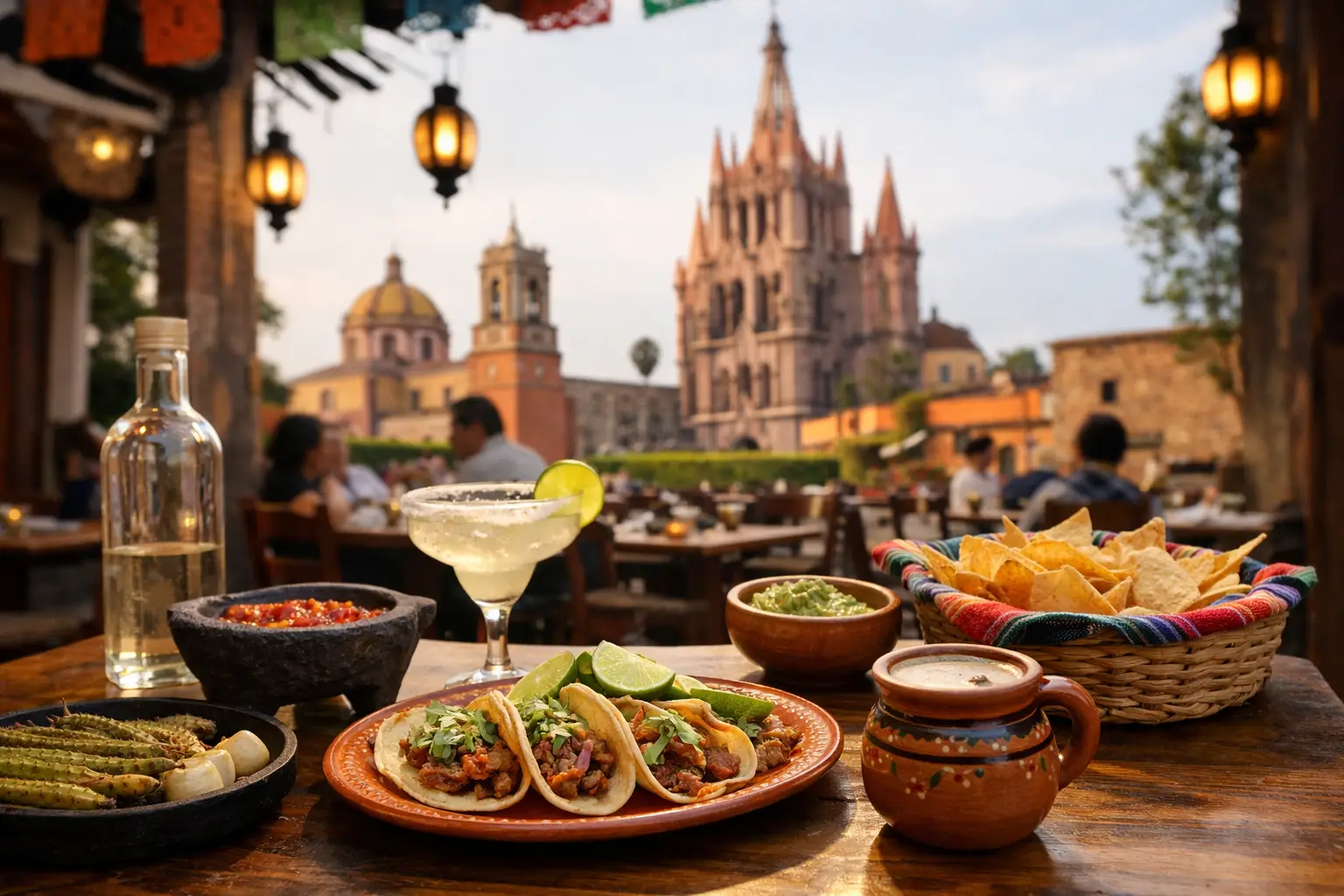
At 9 a.m., a neighborhood comedor may be serving chilaquiles with eggs, warm tortillas, and coffee to regulars before the first museum doors open. By evening, a family recipe for mole might arrive at a polished table a few blocks from the Jardín. That range is exactly why finding traditional Mexican restaurants in San Miguel de Allende can be so rewarding. A pretty dining room can be part of the experience, but it is not the whole story.
San Miguel has extraordinary restaurants, from ambitious contemporary kitchens to casual taco stands. For travelers who want to taste the Mexico behind the postcard, the best meals are often the ones with a clear connection to regional ingredients, family cooking, skilled hands, and the rhythms of daily life. A great traditional meal does not need to be rustic, inexpensive, or hidden. What matters is that the food has a clear connection to the place, its ingredients, and the people who prepare it.
What “Traditional” Means at San Miguel’s Table
Traditional Mexican cooking is not one fixed menu. Mexico’s food culture changes from state to state, town to town, and sometimes from one grandmother’s kitchen to the next. In San Miguel de Allende, you will find dishes rooted in Guanajuato and the Bajío, alongside recipes carried here from Oaxaca, Puebla, Michoacán, Veracruz, and beyond.
Look for a kitchen that takes its salsas seriously. Salsa is not a decorative splash of red or green. It is a cooked, ground, seasoned expression of chiles, tomatoes or tomatillos, herbs, and technique. The same is true of masa. A good tortilla should be warm, fragrant, and sturdy enough to hold its filling without becoming the entire meal.
Traditional also means understanding time. A broth may simmer for hours. Mole can involve a long list of chiles, seeds, spices, dried fruit, and careful balancing. Carnitas require patient cooking in their own rendered fat. None of this guarantees a perfect plate, of course. But when a restaurant honors these processes, you can usually taste the difference.
How to Choose Traditional Mexican Restaurants in San Miguel de Allende
Start by deciding what kind of meal you want. A formal dinner and a market breakfast can both be deeply traditional, but they offer different pleasures. One may showcase a chef’s interpretation of a regional recipe; the other may give you the direct comfort of a dish people eat on an ordinary Tuesday.
Menus are useful clues. A restaurant that names dishes with some regional specificity, such as enchiladas mineras, pacholas, pozole, gorditas, birria, mole, or seasonal nopales, is giving you more to work with than a menu built entirely around generic “Mexican favorites”. Ask your server what is made in-house, what locals order, and what is especially good that day. Those three questions are friendlier and more productive than asking for the single “most authentic” item.
Pay attention to seasonality as well. Squash blossoms, huitlacoche, fava beans, tender nopales, guavas, and local fruit appear at different points in the year. A kitchen that adjusts its offerings to what is available is often cooking with more intention than one serving the same oversized menu every day.
Price can tell you something, but not everything. A modest fonda may serve a memorable daily comida corrida at a very reasonable price, while a chef-led restaurant may charge more because it uses exceptional ingredients, traditional methods, refined service, and a carefully selected Mexican wine or mezcal list. The better question is whether the price feels honest for the care on the plate.
Follow the Daily Meal Rhythm
Breakfast is one of San Miguel’s most delicious opportunities. Seek out huevos al gusto, chilaquiles, enchiladas, tamales, fresh fruit, and pan dulce. The point is not simply to eat as much as possible. Look for food that feels connected to the way people actually eat in San Miguel. Start with food that has an actual point of view.
Lunch is traditionally the day’s substantial meal for many Mexican families. This is the right moment for soups, rice, beans, guisados, grilled meats, and a plate built around the day’s specialty. If you see workers, families, and neighbors eating nearby, it can be a useful clue that the restaurant is part of the neighborhood’s daily routine. It does not guarantee a great meal, but it tells you that people who live nearby are coming back.
Dinner in the historic center can be more polished and social. Reserve ahead when you can, especially on weekends and holidays. A reservation is not a touristy move in a popular town; it is a practical way to enjoy your meal without spending prime dining time waiting on the sidewalk.
Taste Guanajuato, Not Just “Mexican Food”
San Miguel sits in Guanajuato, in the heart of the Bajío, and its food deserves attention on its own terms. Enchiladas mineras are among the region’s signature dishes: tortillas often dipped in a chile sauce, filled with cheese or chicken, then topped with potatoes, carrots, cheese, and sometimes more. They are hearty, colorful, and much more specific than the standard enchilada plate many US travelers know.
You may also encounter pacholas, thin, seasoned ground-meat patties traditionally pressed with a metate; guacamayas, a street-food style torta associated with nearby León; and a range of stews shaped by the agricultural abundance of central Mexico. The exact preparation varies, which is part of the pleasure. Food traditions stay alive because cooks keep making choices, not because every plate comes from a factory template.
Do not skip the simpler foundations. Properly seasoned beans, a bright salsa verde, a bowl of caldo, or a handmade tortilla can be the memory you talk about most after a more elaborate dinner. Mexican food has fireworks, yes. It also has quiet brilliance.
A Few Smart Ordering Habits
If you are unfamiliar with a dish, ask how it is usually eaten. Tacos are generally held with your hands, and a second tortilla is often there to catch the good stuff, not to test your folding skills. Add salsa gradually. A salsa that seems mild at first can become surprisingly hot after a few bites.
When ordering mole, ask which mole the restaurant serves and what the cook wants you to notice. “Mole” is not a single sauce, and it is not simply chocolate sauce. Some moles are dark and deep, some are green and herbaceous, and some are bright with fruit or chiles. The best version for you depends on your heat tolerance and whether you prefer savory, smoky, nutty, or slightly sweet flavors.
For tequila and mezcal, savor rather than shoot. Tequila comes from blue agave and is associated with Jalisco, while mezcal can be made from several agave varieties and has a broader geography. Neither spirit must be smoky, and neither needs salt and lime to be enjoyable. A good server can help you find a pour that suits your palate.
Avoiding the Tourist-Trap Trap Without Being a Snob
San Miguel welcomes visitors from around the world, and there is nothing wrong with eating at a popular restaurant or enjoying an elegant rooftop. The problem is not tourism. The problem is letting a view, a giant menu, or an aggressively cheerful host make every decision for you.
Be wary when every dish seems designed for a photo and nothing appears to have a regional identity. Be equally cautious about treating a humble room as proof of greatness. A plastic chair is not a flavor profile. The most reliable approach is to seek restaurants that are specific about their cooking, busy for understandable reasons, and willing to talk about their food.
Language should not stop you. A few phrases go a long way: “¿Qué recomienda?” means “What do you recommend?” and “¿Pica?” asks whether something is spicy. Pointing, smiling, and a little curiosity work beautifully, too. Most restaurant teams appreciate a guest who wants to understand the dish rather than merely collect it.
Let Context Make the Meal Better
The difference between a pleasant dinner and a lasting food memory is often context. Knowing why a chile is toasted before it is ground, why corn is nixtamalized, or why a certain dish belongs to a celebration changes how you taste it. You do not need a lecture with every bite, but a little culinary storytelling makes the flavors land more deeply.
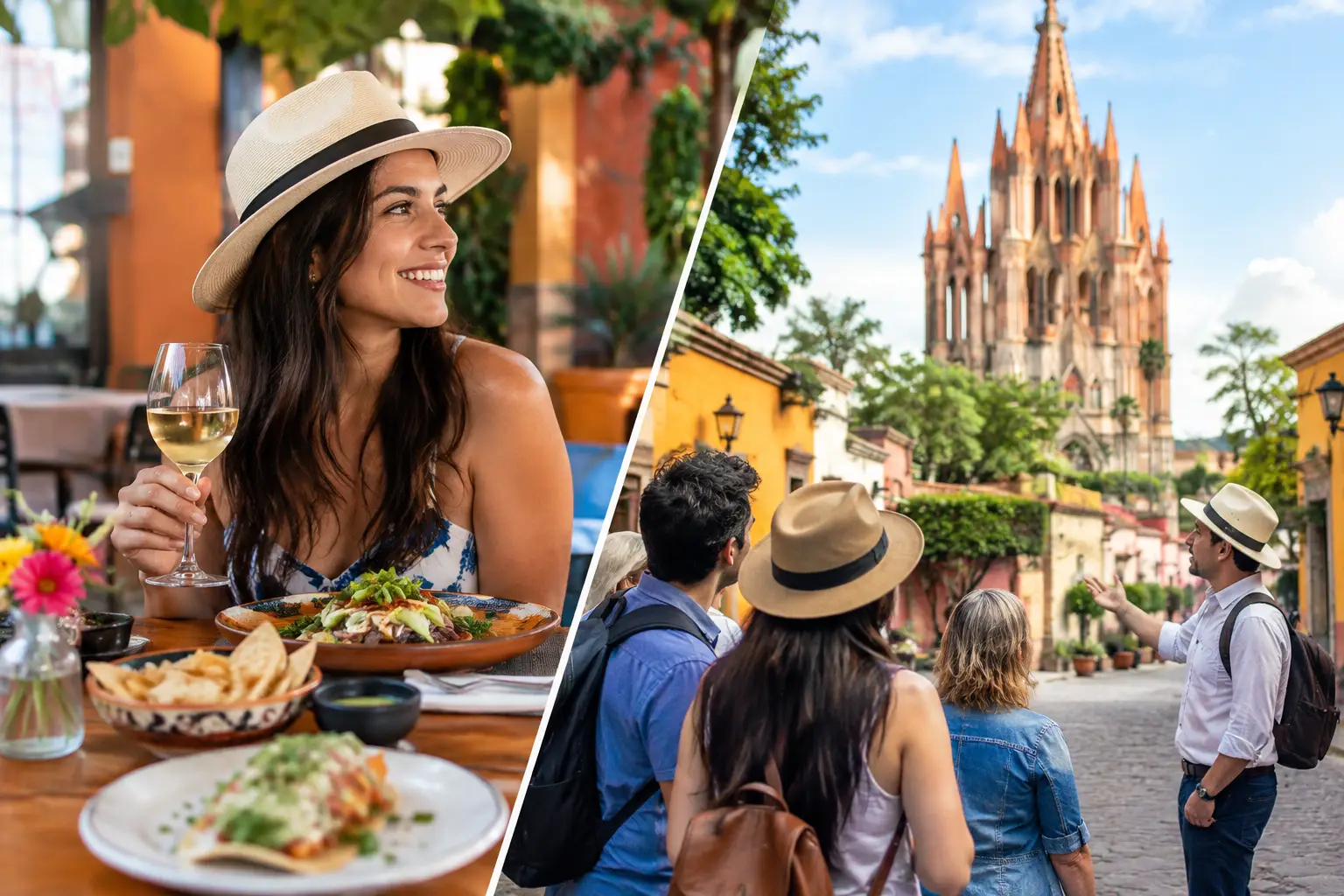
For travelers who would rather not guess, a chef-led culinary experience such as Unforgettable Culinary Traditions can connect several restaurants, dishes, and local food stories in one well-paced outing. It is especially helpful early in a stay, when a knowledgeable local can turn a few favorite dishes into the confidence to keep ordering adventurously on your own.
Leave room in your itinerary for both the meal you planned and the one that surprises you. Follow the scent of fresh tortillas, ask what is simmering, and give yourself permission to order the dish you cannot pronounce yet. San Miguel’s table is generous to curious guests.

Leave a Reply