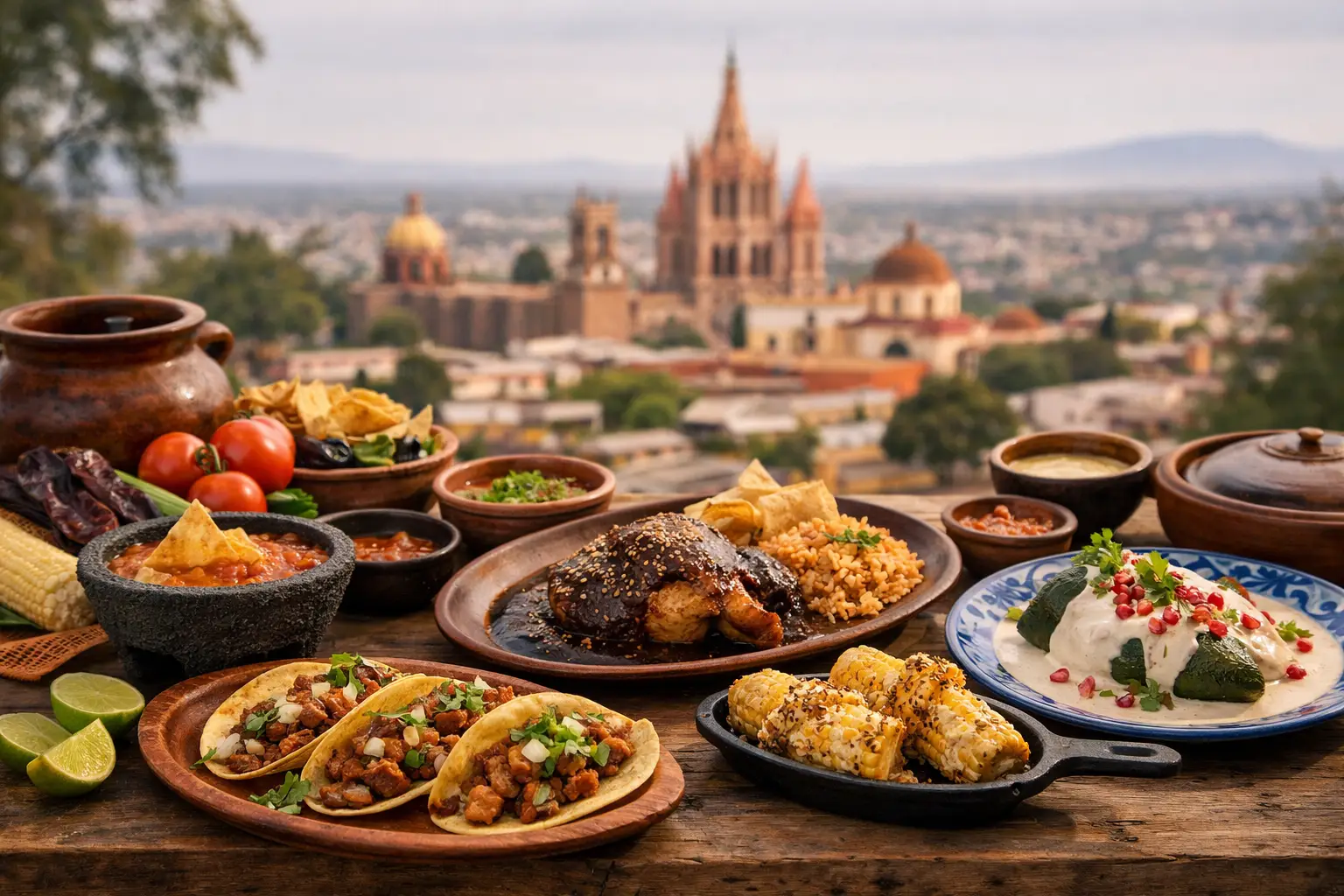
A warm tortilla puffing on a comal, a spoonful of dark mole, a squeeze of lime over a taco – these are not simply delicious moments. They are edible chapters of Mexican culinary history. In San Miguel de Allende, that history is especially easy to feel because old market stalls, family kitchens, elegant dining rooms, and street-side taquerías all share the same essential ingredients: corn, chiles, beans, patience, and pride.
For visitors, the pleasure is immediate. But knowing a little of the story behind the plate changes the experience. A taco stops being a quick snack. Mole becomes more than a sauce. Even a simple salsa reveals the knowledge of cooks who understand seasonality, balance, heat, and the personality of every chile.
Mexican Culinary History Begins With Corn
Mexico’s food story begins long before Mexico existed as a nation. Thousands of years ago, Indigenous communities cultivated and transformed teosinte, a wild grass, into the corn we know as maize. This achievement supported great civilizations and remains at the center of daily life. Corn is not a side dish here. It is a foundation.
The key technique is nixtamalization: cooking dried corn with an alkaline substance, traditionally lime, then soaking and grinding it into masa. This process makes corn more nutritious and workable, and it gives tortillas, tamales, sopes, and countless other dishes their unmistakable aroma and texture. Fresh masa has a soft, earthy fragrance that no packaged tortilla can quite imitate.
Beans, squash, tomatoes, chiles, avocado, cacao, amaranth, nopales, vanilla, and herbs also shaped the Indigenous pantry. Together, these ingredients created food systems that were deeply local and remarkably sophisticated. Cooks understood how to preserve harvests, build flavor with toasted seeds and chiles, and make satisfying meals from what the land offered.
That is why asking for the “most authentic” Mexican food can be a little tricky. There is no single Mexican plate. There are many regional cuisines, each shaped by its climate, crops, migration patterns, and family traditions. A coastal meal tastes different from a highland meal. Northern wheat flour tortillas tell a different story than central Mexico’s corn tortillas.
The Colonial Table Changed the Ingredients, Not the Soul
After the Spanish invasion in the 16th century, new animals and crops arrived: pork, beef, chicken, dairy, rice, wheat, sugar cane, onions, garlic, cinnamon, and citrus. These ingredients changed Mexican kitchens profoundly. They also arrived through a painful colonial system that reshaped land, labor, and daily life.
The food that developed was not a simple case of Spanish dishes replacing Indigenous ones. Mexican cooks adapted new ingredients to established techniques and tastes. Pork fat could enrich a tamal. Wheat became useful in breads and pastries. Cheese found its way into regional dishes. Cinnamon and cloves joined cacao and chiles in complex sauces.
Mole is one of the clearest examples of this layered history. There are many moles, not one official recipe, and each cook may make a persuasive case for their family’s version. Some are dark and rich with dried chiles, seeds, nuts, spices, fruit, and chocolate. Others are green, yellow, red, or brick-colored. They may take hours or days to prepare because flavor is built in stages: toasting, frying, grinding, simmering, tasting, and adjusting.
A good mole is not meant to taste like chocolate sauce. Chocolate is often only one supporting voice in a much larger chorus. The real magic is balance – heat, bitterness, fruitiness, sweetness, smoke, acidity, and savory depth all working together.
The Global Journey Hidden in Mexican Food
Mexico also became a crossroads for ingredients traveling between continents. Through Spanish trade routes, Asian ingredients and techniques reached New Spain, influencing sweets, rice dishes, spices, and kitchen traditions. Later, French culinary fashion influenced baking and formal dining, while Lebanese migration helped shape beloved dishes such as tacos árabes and, eventually, tacos al pastor.
That last example is a delicious reminder that tradition is not frozen in time. Al pastor may feel completely Mexican today, with marinated pork shaved from a vertical spit and tucked into a corn tortilla with pineapple, onion, cilantro, and salsa. Its ancestry also reflects the shawarma traditions brought by Lebanese immigrants. Mexican culinary history is rooted, yes, but it is also inventive.
Why San Miguel de Allende Tastes Like Central Mexico
San Miguel de Allende sits in the Bajío, a fertile central region whose food reflects farming, ranching, trade, and a long history of migration. Corn and beans remain essential, but so do pork, goat, beef, dairy, wheat, chiles, and the bright salsas that make every table feel alive.
One local favorite is enchiladas mineras, or miner’s enchiladas. Corn tortillas are typically dipped in chile sauce, filled, folded, and served with potatoes, carrots, cheese, and sometimes chicken. The name connects the dish to the region’s mining heritage, when hearty, practical meals sustained workers. It is history with a little chile on your fingers.
You may also encounter chiles en nogada when the season is right, rich stews, hand-formed gorditas, pozole, and street tacos prepared with remarkable confidence. The best version of a dish may appear in a humble market stall, a neighborhood kitchen, or a polished restaurant. Price and tablecloths do not tell the full story. Freshness, technique, and the cook’s point of view matter more.
For travelers, this is where a little local guidance earns its keep. Menus can be unfamiliar, and a place that looks quiet at 1:00 p.m. may be packed with locals an hour later. A chef-led experience can explain what you are tasting, help you order with confidence, and point out details that are easy to miss, from a particular salsa’s chile to why one tortilla has a deeper corn flavor than another.
How to Taste History, Not Just Take Photos
Start with the tortilla. Is it warm? Does it have a gentle corn aroma and a little chew? A great taco begins there. Then notice the salsa. A red salsa might be made with smoky dried chile, while a green one may rely on tomatillo, serrano chile, garlic, and herbs. Heat is only one part of the equation. Flavor comes first.
When you try a mole, ask what chiles are used and whether the sauce is regional or a family recipe. When you see a tamal, remember that its basic form reaches back many centuries, even though fillings vary widely. When you enjoy a sweet bread with coffee, think about the wheat, sugar, ovens, and baking traditions that entered Mexican life through colonial and later European influences.
It also helps to let a meal unfold at its own pace. Mexican hospitality is rarely about rushing through a checklist of famous dishes. It is about conversation, shared plates, a second tortilla when the first one clearly was not enough, and the pleasure of being at the table together. If you are offered a new salsa, say yes – perhaps cautiously, but say yes.
At Unforgettable Culinary Traditions, this is the joy behind tasting San Miguel one course, one taco, and one story at a time. The goal is not to turn lunch into a lecture. It is to make the city feel more legible, more generous, and even more delicious.
A Living Tradition Worth Meeting With Curiosity
Mexican food belongs to the people who grow, grind, roast, simmer, serve, and share it every day. Recipes change with the season, the available ingredients, and the hands making them. That flexibility is not a break from tradition. It is how tradition survives.
So when you sit down in San Miguel de Allende, arrive hungry and stay curious. Order the dish you cannot pronounce yet. Ask what is in the salsa. Take that first bite of warm tortilla before adding anything else. Mexico’s great food story is still being written, and one very good place to read it is right on your plate.


Leave a Reply