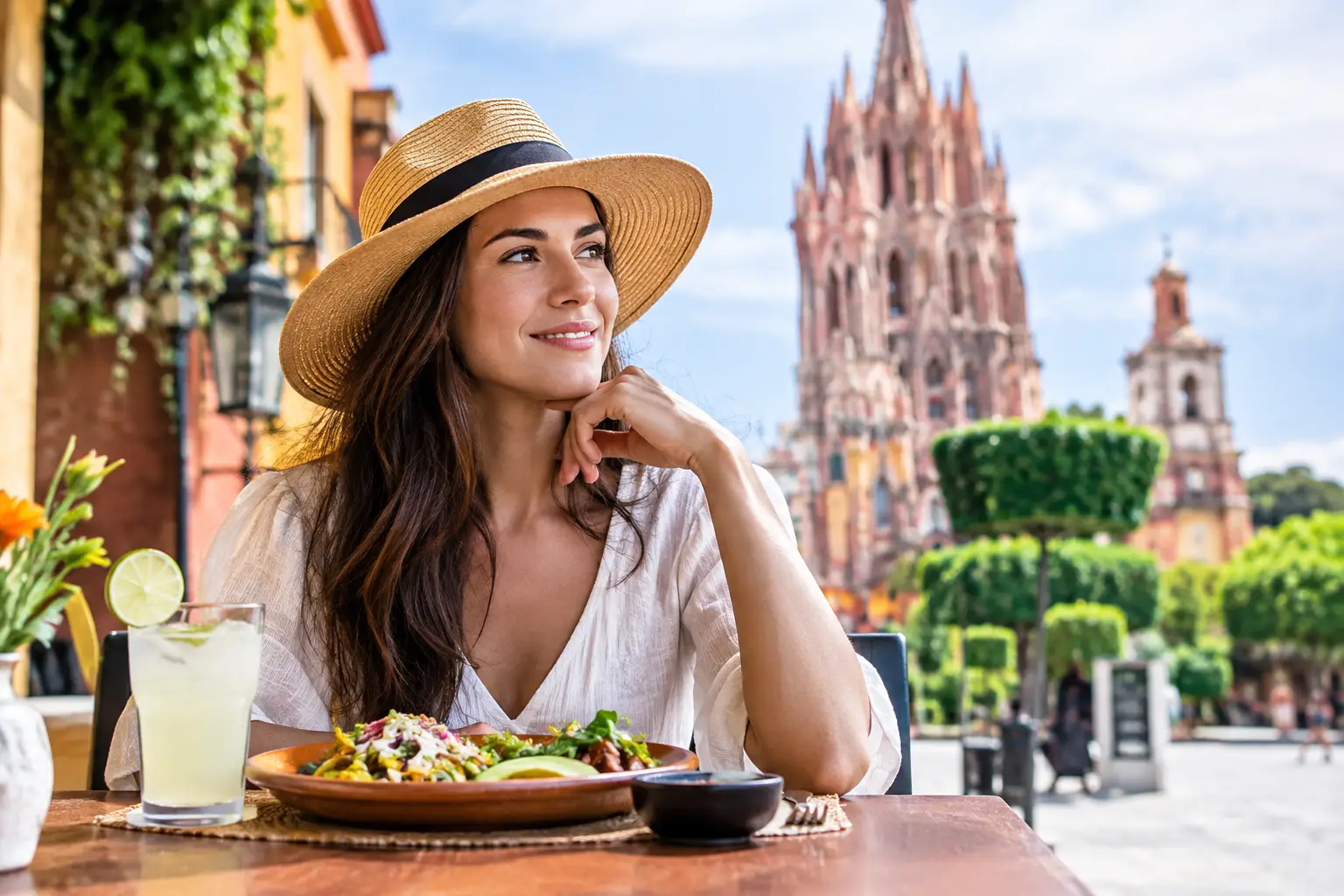
The menu outside promises “authentic Mexican food,” the patio has a perfect view of the Parroquia, and someone is waving you toward a table. It may be a wonderful lunch. Or it may be a meal designed to move visitors through quickly, with little connection to the cooking that makes San Miguel de Allende so delicious. Learning to avoid tourist trap dining is not about rejecting every restaurant near the center. It is about knowing where to look, what to ask, and when a little local context turns dinner into a real memory.
San Miguel is a remarkably welcoming city, and its dining scene ranges from serious regional cooking to cheerful street snacks, elegant contemporary kitchens, family-run fondas, bakeries, markets, and restaurants built for an international crowd. The goal is not to eat only where nobody speaks English. The goal is to find food made with care, served with pride, and rooted in the people and ingredients of this part of Mexico.
A full patio is not the whole story
A busy dining room can be a good sign, but it is not proof that a restaurant is excellent. In a destination as popular as San Miguel, a place can stay packed because it has a prominent location, an aggressive host, a long cocktail list, or a view that photographs beautifully at sunset.
Start by looking past the first block around the main square. Some exceptional meals are in the historic center, of course, but walk a few streets beyond the most obvious routes or visit a neighborhood market at lunchtime. Notice where people are eating at ordinary hours, not only at 7:30 p.m. when every visitor is looking for a table.
The best clue is often rhythm. A restaurant with regulars tends to have a confident pace: servers know the dishes, guests seem comfortable ordering, and food arrives from a focused kitchen rather than an enormous menu trying to please every possible traveler.
How to avoid tourist trap dining without chasing a fantasy
Let us gently retire one travel myth: a handwritten sign, plastic chairs, or a room full of Spanish speakers does not automatically guarantee the best meal of your trip. A beloved neighborhood place can have an off day. A polished restaurant with English-speaking staff can serve beautiful, deeply informed Mexican cooking.
Instead of searching for a performance of “local,” look for specificity. Does the menu tell you something about the dish, its region, or its main ingredient? Is the mole made in-house? Which chile is used in the salsa? Does the restaurant feature seasonal produce, local cheese, or a family recipe? A proud server or chef will usually be happy to talk about what makes a dish special.
One question opens many doors: “What do you recommend that is especially Mexican or regional here?” Ask it with genuine curiosity, then listen. If the answer is immediate and enthusiastic, you may be in very good hands. If every recommendation points to the most familiar item on a broad, generic menu, consider ordering a drink and continuing your search.
Read the menu like a hungry local
Menus built entirely around convenience can be a warning sign. When a single kitchen offers sushi, burgers, pizza, pad thai, fajitas, pasta, and “traditional Mexican” food across six pages, something has to give. There is nothing wrong with craving a burger after days of chile and tortillas. Just do not expect that kind of catch-all menu to be your clearest route into Guanajuato’s culinary traditions.
A tighter menu often means a kitchen has made choices. Perhaps it specializes in tacos al pastor, barbacoa, moles, breakfast dishes, seafood, or a thoughtful modern interpretation of Mexican ingredients. A few dishes that change with the season are another encouraging sign. Good cooks buy what is beautiful and available, then let it lead the menu.
Pay attention to the details around familiar dishes, too. “Tacos” alone tells you very little. Tacos de carnitas, cecina, huitlacoche, requesón, or slow-cooked pork in a particular salsa tell you more. The same applies to enchiladas, tamales, and moles. Mexican food is not one flavor profile. It is a magnificent collection of regional techniques, corn varieties, chiles, herbs, and family traditions.
Follow the ingredient, not just the Instagram moment
San Miguel’s prettiest table may serve a lovely meal, but the food becomes more meaningful when you know where it comes from. Seek out dishes that give you a reason to ask a second question. What is in that dark mole? Why is this tortilla blue? Is that queso fresco made nearby? Which tequila or mezcal works with this salsa?
A true local dining experience is often built on these small exchanges. The chef may explain that a sauce requires toasted chiles, seeds, spices, bread, fruit, and patient grinding. A taco vendor may show you the proper way to add salsa without drowning the filling. A market cook may tell you which stew appears on the family table during a celebration.
That knowledge changes the bite. You do not just taste Mexico – you understand why it tastes the way it does.
Use the market wisely
Markets are one of the fastest ways to see what a city is eating, but they reward a little common sense. Visit during the active morning and lunch hours, when stalls have fresh turnover and the cooks are in their rhythm. Choose vendors with clean work areas, hot food that is actually hot, and ingredients that look lively rather than tired.
If you are unsure what to order, watch for a moment. See what nearby shoppers request. A line of locals is useful, but look for movement, not just a crowd stuck waiting. Then start simple: a plate of guisado, fresh tortillas with a stew, a warm quesadilla made to order, or a seasonal agua fresca.
Market eating can be gloriously informal, but it may not suit every moment. Travelers with severe allergies, limited mobility, or a preference for a relaxed, reserved table may be better served by a restaurant or a guided experience that can plan around those needs. There is no prize for making lunch harder than it has to be.
Be careful with “Mexican” food made for everyone
Tourist traps often flatten Mexican food into a few predictable ideas: oversized nachos, fluorescent margaritas, generic salsa, and plates so large they could feed the table next to you. Fun can absolutely have its place – vacation is allowed to be fun! But when every dish feels engineered around a visitor’s expectations, the flavors can lose their place and personality.
Choose one or two meals where you are willing to be guided. Try a tasting menu with Mexican roots, a carefully prepared mole, or a progressive dinner that introduces several styles of cooking. Save the familiar comfort food for the day you truly want it, not because it was the first menu handed to you.
Price deserves context, too. A higher bill does not make a restaurant a tourist trap, especially when you are paying for excellent ingredients, skilled labor, thoughtful service, and a central location. The concern is value. Did the meal have character? Were the ingredients handled well? Did anyone help you understand what you were eating? A modest bowl of pozole can be unforgettable. So can a refined five-course dinner. It depends on the care behind it.
Ask for help from people who cook and serve
Hotel staff and concierges can offer useful recommendations, but their lists may favor places that are easiest for visitors to reach or that meet a particular expectation. Ask a more precise question than “Where should we eat?” Try asking where they would take a friend who loves mole, where to find a memorable breakfast, or which restaurant does a particular regional dish well.
Better yet, speak with people whose work is connected to food: a baker, bartender, market vendor, chef, or the person serving your morning coffee. Their recommendations are often more specific because they know who is making a fine salsa this week, who has a talented new cook, or where the best tortillas are coming off the comal.
For travelers who would rather skip the guesswork, a chef-led experience can offer a generous shortcut. At Unforgettable Culinary Traditions, the point is not simply to collect tastings. It is to sit down with the stories behind them, meet the people who sustain these traditions, and leave knowing how to order your next taco with considerably more confidence.
Give yourself permission to leave
You are not obligated to stay because someone greeted you warmly, because you studied the menu for five minutes, or because a review called a restaurant “the best in town.” If the menu feels generic, the room feels pushy, or the prices do not match what you are seeing, thank the host and keep walking. San Miguel has more good food than any visitor can eat in a single trip.
The happiest approach is curious rather than suspicious. Order the dish you have never tried. Ask about the salsa before you pour it on. Follow the scent of warm corn, roasted chile, and fresh bread down a street you had not planned to visit. The meal you remember most may not have the best view of the church. It may be the one where someone proudly tells you, “This is how my family makes it.”

Leave a Reply