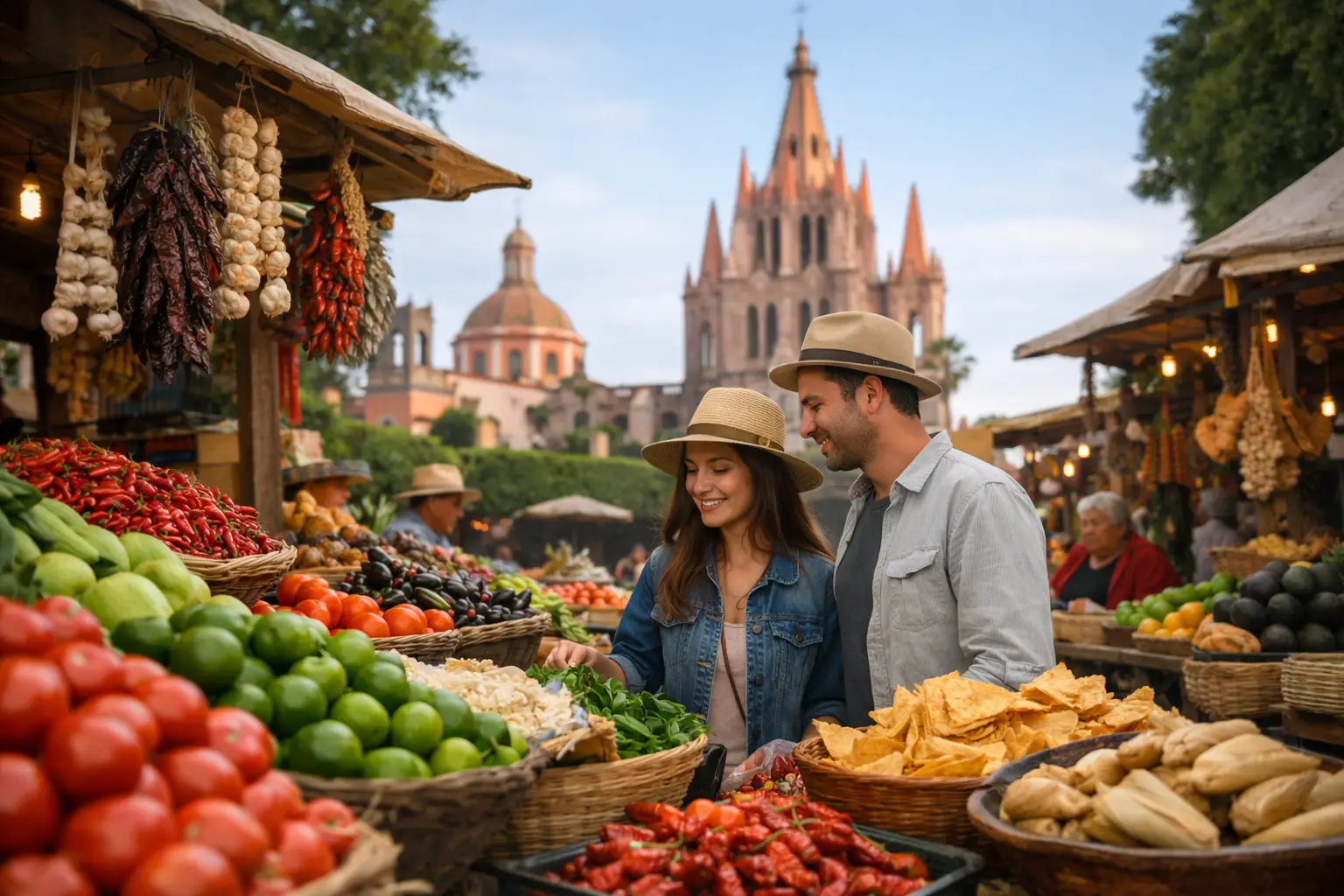
A San Miguel de Allende market tour is not about checking off exotic ingredients or taking a quick photo of colorful produce. It is about hearing a tortilla puff on the comal, spotting the chile vendor everyone trusts, and understanding why a simple bowl of beans can carry generations of family knowledge. Markets are where San Miguel eats every day, and they reward travelers who arrive curious, hungry, and ready to slow down.
For visitors who want more than a restaurant recommendation, the market is the delicious missing chapter. Here, Mexican food is not a menu category. It is a living conversation between farmers, cooks, vendors, regular customers, and the seasons.
What Makes a San Miguel de Allende Market Tour Different
San Miguel de Allende is famous for its golden churches, cobblestone streets, and polished restaurants. All of that deserves attention. But markets show another side of the city: practical, generous, busy, and wonderfully fragrant. You may pass piles of nopales, baskets of still-warm pan dulce, tubs of fresh cheese, deep red guajillo chiles, and stalls where lunch is served to people who know exactly what they want.
A thoughtful market visit gives those details meaning. Why are some chiles toasted before they are soaked? What makes a good salsa taste bright instead of harsh? Why does a tortilla made from freshly nixtamalized corn have such a different aroma and texture from a packaged tortilla? These are the questions that transform tasting into understanding.
That cultural context matters because Mexican cuisine is full of technique. A mole may contain a long list of ingredients, but the real magic lies in how each ingredient is cleaned, toasted, ground, fried, blended, and balanced. A market is where you begin to see the work behind the plate.
Where the Real Flavor Lives
Mercado Ignacio Ramírez, often called the main market, is a wonderful place to feel San Miguel’s everyday rhythm. It is close to the center, but it is not staged for visitors. Locals come for fruit, flowers, chicken, spices, tortillas, kitchen supplies, and lunch. The sensory overload is part of the fun: ripe mango, cilantro, roasted meat, fresh limes, soap, chile dust, and sweet bakery aromas all competing for your attention.
Near the market, the artisan stalls and surrounding streets add another layer to the experience. You can see the connection between food and craft in clay cookware, woven baskets, wooden utensils, and hand-pressed tortilla tools. A beautiful cazuela is not just decoration. In many Mexican kitchens, its shape and material affect how a sauce cooks and how long it holds heat at the table.
Depending on the day and route, a guide may also introduce neighborhood markets or tianguis, the temporary open-air markets that bring in vendors from surrounding communities. These can be especially revealing when seasonal ingredients appear. Rainy-season mushrooms, tender squash blossoms, or particular regional fruits are reminders that Mexican cooking follows the calendar, even when restaurants offer familiar favorites year-round.
What to Taste, and How to Taste It
The best market snacks are often humble ones. A fresh tortilla with cheese and salsa can tell you more about local standards than a fancy plate with ten garnishes. Look for dishes made to order, served hot, and enjoyed by people who are clearly regulars.
Start with the tortilla. Ask if it is made from nixtamalized corn, meaning corn that has been cooked and soaked with calcium hydroxide before grinding. This ancient process is essential to the flavor, nutrition, and texture of real corn masa. You do not need a lecture while you eat, but once you have tasted a warm blue-corn or white-corn tortilla straight from the comal, you will understand why locals care so much.
Then come the salsas. Treat them with respect. The pale green salsa may be gentle, or it may be a friendly-looking ambush. A good host will show you how to taste a tiny amount first, recognize the difference between creamy avocado salsa and fiery serrano salsa, and pair heat with the right bite. There is no prize for suffering through a chile that has defeated you. There is, however, great joy in finding the salsa that makes you reach for one more taco.
Market tours may also include gorditas, tamales, enchiladas, chicharrón, fruit drinks, local cheeses, or sweets. What you taste depends on the season, the market’s pace, and the vendors working that day. That flexibility is a feature, not a flaw. The best food experiences leave room for the market to be itself.
How to Order Without Feeling Awkward
You do not need fluent Spanish to enjoy a market, but a few words go a long way. “Buenos días” and “gracias” matter. So does pointing with a smile when you are choosing from a tray of pastries that all look irresistible.
At a busy food stall, watch the local rhythm before stepping forward. Some counters take orders first and payment later; others run the opposite way. If you are unsure, ask, “¿Aquí se ordena?” – “Do you order here?” Vendors are usually patient when guests are respectful, especially when you are not blocking the line during the lunch rush.
For tacos, the practical rule is simple: use the tortillas you are given, add salsa carefully, and eat with your hands. Forks have their place, but a taco is happiest when folded, held firmly, and eaten before its delicious contents escape. Napkins are not optional. Neither is a sense of humor.
A Few Smart Market Tour Tips
Go hungry, but do not skip breakfast if you are sensitive to spicy food or tequila. Wear comfortable shoes with decent grip, since market floors and cobblestone streets can be uneven. Bring a small amount of cash in pesos for personal purchases, even if your organized experience includes all tastings.
Morning offers the strongest selection of fresh ingredients and a little more room to talk with vendors. Midday is ideal if your dream is to see the lunch counters at full speed. Neither is automatically better. It depends on whether you are more interested in ingredients, cooking stories, or sitting down for the dishes locals order on an ordinary day.
Food allergies and dietary needs deserve a direct conversation before the tour begins. Mexico offers wonderful vegetarian possibilities, including beans, squash blossoms, mushrooms, cheese, cactus paddles, and corn-based dishes. Still, lard, chicken stock, dairy, and cross-contact can appear in foods that look meat-free. A knowledgeable guide can help you make delicious choices without relying on guesswork.
Mobility is another consideration. Traditional markets can have narrow aisles, steps, crowds, and irregular sidewalks nearby. Travelers who use wheelchairs or prefer a gentler pace should choose an experience designed with transportation and accessibility in mind rather than trying to force a standard walking route to work.
Why a Chef-Led Visit Changes the Experience
You can certainly wander through a market on your own, and spontaneous wandering has its charm. The trade-off is that you may not know which stall is exceptional, what you are tasting, or when a dish is made in a way that is truly special. You may also miss the stories that turn a delicious bite into a memory.
A chef-led experience such as Unforgettable Culinary Traditions brings the market into focus. Instead of simply being told that something is “authentic,” you can learn what to look for: the color of properly toasted chiles, the fragrance of fresh masa, the regional habits behind a favorite sauce, and the care a cook takes before the first customer arrives.
That is the real pleasure of eating in San Miguel. You leave with a full stomach, yes, but also with better instincts. The next time you see a busy comal, a bowl of salsa, or a basket of tortillas, you will know to pause, ask a question, and taste what the cooks of San Miguel have been preserving all along.

Leave a Reply